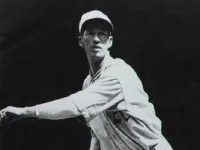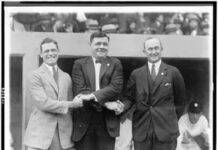




Babe Ruth started Opening Day for the Boston Red Sox in 1918. It was the third time in a row. He won the game. That victory marked the peak of a strange, beautiful anomaly in baseball history.
For the first month of the season, the Red Sox rotation was solid. Ruth, Carl Mays, Dutch Leonard, and Joe Bush never missed a turn. They were the steadiest quartet in baseball. But the team wasn’t scoring. The bats were cold.
Then came May 4.
Ruth crushed his first home run of the year. It cleared the roof of the Polo Grounds. The target was the New York Yankees, naturally. The shot solved the hitting problem, or at least pointed to the solution. Why wasn’t Ruth batting every day?
Why Babe Ruth Changed Positions
The question wasn’t new. Harry Hooper had been arguing with manager Ed Barrow about it for weeks. The regular lineup was decimated by injuries and military service. Barrow finally cracked.
On May 6, Ruth played first base. He batted sixth against the Yankees.
The location was symbolic. The Polo Grounds had seen Ruth’s first major league home run exactly three years prior. This time, the crowd included Red Sox owner Harry Frazee and Yankees owner Jacob Ruppert.
Ruth hit another home run. It was his fifth career homer at that specific park.
Ruppert reportedly offered to buy the young slugger on the spot. Frazee said no. It was an omen of things to come.
The next day, Ruth played first base again in Washington. He homered for the third straight game. A rare feat. He doubled the day after that. Then, he returned to the mound.
He pitched ten innings in a 4-3 loss. He also went 1-for-3 with three doubles and a triple.
Ruth was hitting .484. The talk of the sport. The Red Sox, meanwhile, lost six in a row.
Barrow could have ended the experiment. But Boston was heading home. Crowds would be huge. Barrow had a $50,000 investment. He kept Ruth in the lineup.
At Fenway Park, Ruth shifted to left field. The change unnerved him. He went hitless, ending a 10-game hitting streak.
Back at first base the next afternoon, he had three hits. He fielded well. The crowd roared every time he stepped into the box.
Then came the sickness.
A sore throat worsened. Ruth was scratched from a May 20 pitching start. He was sent home. The team trainer accompanied him. They stopped at a drugstore. The trainer treated Ruth’s throat with silver nitrate, a common prescription then.
It was a mistake.
The chemical caused pain and choking. Ruth ended up in the hospital. Doctors diagnosed swelling of the larynx. They called it serious.
He stayed in the hospital for a week. Later, he would blame this incident for his trademark husky voice.
He rejoined the club on May 30. He got one pinch-hit appearance. Then he pitched three days later. He lost the game, despite hitting a home run.
He was moved back to the outfield. He homered in the next three games.
The Babe Boycotts Pitching
Ruth was enjoying himself. When his turn to pitch arrived, he told Barrow he was done. He wanted to hit every day.
Barrow agreed. Sad Sam Jones stepped in and pitched well.
Then Dutch Leonard jumped the club. He took a shipyard job to avoid the draft. Barrow needed Ruth back in the rotation.
Ruth claimed a wrist injury. He refused to pitch.
After a brief benching, Ruth returned to the lineup. He hit three home runs in little over a week. He had 11 on the season. Only three American Leaguers had reached that mark in the previous fifteen years. The date was June 30.
An argument led Barrow to fine Ruth $500.
Ruth was distressed. He stormed out of the clubhouse. He retreated to his father’s home.
The team traveled to Philadelphia. Two days later, headlines screamed that Ruth was quitting the Red Sox. He would play for a Pennsylvania shipyard team instead.
Things were ironed out. Ruth returned. He was supposed to play outfield and pitch when needed.
Baseball faced a bigger crisis. The war effort classified baseball as nonessential. Hundreds of players were open to the draft. A compromise was reached. The season would end a month early, on Labor Day. Players could stay if they agreed.
Ruth’s deal with Barrow meant he would pitch every fourth day down the stretch.
He won seven games in little over a month. He helped the Red Sox win their third pennant in four years.
His final record: 13-7. A 2.22 ERA. 18 complete games in 19 starts.
It was an illustrious pitching line. But the most excitement came from his 59 outfield games and 13 at first base.
His power vanished for the final two months. But he had just 317 at-bats. His 11 home runs tied him for the major league lead.
He had 66 RBI, tied for third. 26 doubles, second. He was the only .300 hitter on the team.
He also led the league with 59 strikeouts.
This didn’t hurt his popularity. Fans loved watching him miss. They loved the windup. The pretzel-like position. They enjoyed the misses almost as much as the connections.
The 1918 World Series
The Red Sox had a 21-game winner in Carl Mays.
Barrow fooled almost everyone. He started Ruth in the World Series opener.
The date was September 5. The location was Wrigley Field. The opponent was the Chicago Cubs.
Everyone expected Ruth to play left field in the first contest.
Instead, he threw a six-hit 1-0 shutout.
He set up the winning run with a single in the fourth inning. The pitcher was Hippo Vaughn.
Ruth was the center of attention again.
He had changed the game before the final series even began. The batter-pitcher dual threat was no longer a question. It was a reality.
The Red Sox were pennant winners. The crowds were packed. The voice was raspy. The bat was hot.
It was only the beginning.
The Iron Arm and the Empty Promise
The Red Sox and Cubs split the next two games, setting the stage for Ruth to take the mound in Game Four in Boston. He had a plan. Or at least, he was supposed to. Instead of focusing on mechanics, Ruth was horsing around on the train ride home and injured the middle knuckle of his pitching hand.
He still started. He still struggled. But he won.
It was a gritty 3-2 victory. Ruth relied on relief help in the ninth inning and his own two-run triple to seal it. But the stats don’t tell the whole story of that performance.
He also shut out the Cubs over the first seven innings.
That pushed his streak to 29 consecutive scoreless frames across three games. This included one appearance in the 1916 Series. It broke Christy Mathewson’s record of 28, set way back in 1905. Ruth’s mark would stand for 42 years. He never cared about his home runs or batting average as much. He always labeled this streak his proudest accomplishment in baseball.
The Unbroken Season That Never Was
The final two games were messy. A player strike was thwarted over record-low Series shares. The money wasn’t right. But the Red Sox won anyway. They took the series without a loss. It was their fifth World Championship overall.
They were a strong team. The front office expected them to be on top for years. The 23-year-old Ruth was their prize player. The future looked bright.
Then the war ended two months later.
Fans looked forward to an uninterrupted season. They wanted to see their beloved team claim another flag. They thought it was inevitable.
Little did they know how long the wait would be.
Off the Field Antics
Babe’s performances off the field would garner some extra attention in the coming years. His legend grew not just from what he did on the diamond, but from the chaos he created everywhere else.
Find out about his antics in the next section.