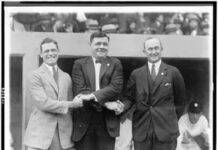




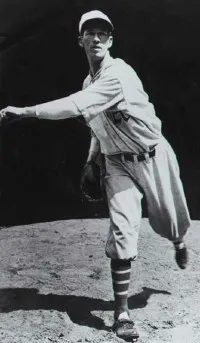
The 1926 comeback was a miracle, sure. But the 1927 baseball season brought a different kind of monster. It was a year where the New York Yankees didn’t just win. They dismantled the American League with such violence that historians still argue it was the greatest team ever assembled.
They called it “Five O’Clock Lightning.”
The name stuck because the Yanks had a habit of waking up the crowd in the fifth or sixth inning. They knew their opponent’s starter by then. The arm was tired. The focus slipped. And in the 1920s, starters didn’t come out at the first sign of weakness. Managers let them grind through nine innings unless they were getting crushed.
This tolerance for pain forced a change in strategy. Relief specialists weren’t a thing yet. But the 1927 Yankees were so lethal with the bat that managers had to bring in fresh arms just to stop the bleeding. Some say this tactical shift, born from the sheer power of Ruth and Gehrig, was the second greatest contribution to baseball strategy in history.
The Price of Power
Money was changing hands in ways nobody had seen before. Before the season tipped off, Babe Ruth signed a three-year deal worth $70,000 a year.
Let that sink in.
General Manager Ed Barrow made $25,000. Manager Miller Huggins made a bit more than half of Ruth’s salary. No other player on the roster cleared $20,000. Ruth was an anomaly. A financial outlier.
His on-field income was only half the story. In February 1927, he starred in the movie The Babe Comes Home. That role, plus endorsements, helped him rake in an estimated $250,000 for the year prior to the season. The Yankees knew they couldn’t afford downtime. They scheduled exhibition games on nearly every off-day. Ruth played in almost all of them. He was an asset that needed constant rotation and use.
Dominance by the Numbers
The 1927 Yankees didn’t just win the pennant. They ran away from it.
The second-place Philadelphia Athletics finished with the same record the Yanks had in 1926: 91-63. In 1927, that was a distant second. It put them 19 games back. New York finished 110-44.
That 110-win total was five more than any AL team had ever achieved.
Look at the stats. Of the eight American Leaguers with 100 RBIs, four wore pinstripes. The Yanks scored 130 more runs than the next best team. They weren’t just hitting more. They were hitting everything better. No other team matched their hits, triples, walks, batting average, on-base percentage, or slugging average.
They struck out 180 more times than any other club. So what?
They hit 102 more home runs than any other team. One out of every four home runs in the entire league that year came from the bats of Babe Ruth or Lou Gehrig. The margin for error was zero. The margin for victory was massive.
The Race for 60
With the pennant already in the bag, the real drama unfolded in the home run race. It was Ruth versus Gehrig. Both were chasing Ruth’s existing single-season record of 59.
Newspapers covered every swing. Every foul tip. By August 10, Gehrig led with 38. Ruth sat at 35.
Gehrig cooled off. Ruth caught fire.
The first baseman hit nine more dingers. The Babe hit 25.
With four games left, Ruth needed four to tie the record. On September 27, he hit a grand slam off Lefty Grove. The next day, he hit two more. One was a solo shot. The other was another grand slam.
In his third at-bat that game, he walloped a triple to center. It would have been number 60 if he’d pulled it to right. Next time up, he hit a towering fly to right field. Goose Goslin had to scrunch against the wall, reaching up to snag it before it cleared the fence.
Ruth tied the record with two games to go.
September 30. The score was tied at two. Mark Koenig hit a one-out triple in the eighth. The Senators faced a choice: walk Ruth intentionally and hope for a double play, or pitch to him.
Pitcher Tom Zachary chose to pitch.
Ruth deposited the third pitch into the right-field bleachers.
Zachary screamed that it was foul. The umpire disagreed. The ball was live. Ruth had broken his own record. It would stand for 34 years. No New York Yankees rightfielder would ever crack it under the weight of expectation until Roger Maris tried. And that’s a different story for a different time.
The World Series Reality
The opponent was the Pittsburgh Pirates. They hadn’t run away with the National League. They won it by a game and a half.
Statistically, Pittsburgh was tough. They batted .305 to the Yanks’ .307. They led their league in hits and runs scored. They had three future Hall of Famers in their lineup: Pie Traynor, Paul Waner, and Lloyd Waner. Their pitching staff featured two starters who wore glasses. A rarity then. A common sight now.
But they lacked power. No Ruth. No Gehrig. No Tony Lazzeri.
A myth grew around that Series. Christy Walsh, Ruth’s financial advisor, had ghostwriters who claimed the Pirates were so awed by the Yankees’ size and power during batting practice that they mentally broke before the first pitch. They were crushed in four games.
The truth is messier. The Pirates were a legitimate threat. They played hard. They made the Yanks work for every inning. But when the lights went down, the 1927 Yankees were simply too much.
The dynasty was built. The record stood. But the pressure to surpass it? That was just beginning.
The Aftermath of the Fall
The Pirates were a dirt-tough crew. They didn’t panic. But history is clear on one point: no Pirate interviewed by researchers ever recalled watching the Yankees’ batting practice. The scoreboard told a different story of dominance, though the margins varied. New York took the series in four games. The scores? 5-4. 6-2. 8-1. And that final 8-1 tilt featured a six-run outburst in a single inning that shattered any pretense of competitiveness. The clincher was a 4-3 win, but the margin felt irrelevant compared to how the final out occurred.
Pirates pitcher John Miljus, known to fans as “The Big Serb,” sealed the deal. Not with a strikeout. Not with a ground ball. He threw two wild pitches in the same inning. The game ended not with skill, but with chaos at the plate.
Barnstorming and Broken Records
Post-Series barnstorming tours were a different beast entirely. The “Larrupin’ Lous” and “The Bustin’ Babes” hit the road for 21 games. Babe Ruth’s compensation structure for Lou Gehrig shifted mid-stream. Ruth had originally planned to give Gehrig a percentage of the gate takings. Then he changed his mind. Gehrig received a flat $10,000.
That was $3,000 more than Gehrig made for the entire regular season.
The money was significant. The entertainment was volatile. Thirteen of those 21 games were never officially completed. Fans poured out of the stands, flooding the field, turning orderly contests into unruly spectacles. The line between player and spectator vanished.
A Shift in Dynamics
Amidst the dust and the doorbell rings, something else was happening between Ruth and Gehrig. The relationship was evolving. It wasn’t just about sharing a lineup anymore. It was moving toward a new sort of connection. Professional interactions grew deeper. Personal ties solidified in the shadows of the crowds and the chaos of unfinished games.
The series was over. The barnstorming faded. But the dynamic between the Sultan of Swat and the Iron Horse was just beginning to take its true shape.