


Miller Huggins had no idea how to rein in his roster. The Yankees were winning, so the discipline problems didn’t matter much. They had the pennant by October 1. Cleveland trailed by four and a half games. The pitching staff was gassed, but the hits kept coming.
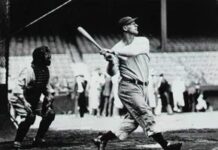
Babe Ruth was the engine. The 1921 season numbers are almost impossible to parse today. He hit 59 home runs. That beat his own previous record by five. It was 35 more homers than the guy in second place. He scored 45 more runs than anyone else. With 44 doubles and 16 triples, he racked up 92 more total bases than the next best batter. He drove in 171 runs. He walked 144 times. Only one other player in the league walked 100 times that year.
His batting average was third. Harry Heilmann and Ty Cobb were ahead of him. But Ruth’s on-base percentage crushed Cobb’s by 60 points. His slugging percentage was .846. The year before it was .847. Since then, only Lou Gehrig has slugged above .757.
How Babe Ruth’s 1921 Injuries Changed the Series
The 1921 World Series felt like a fight between two baseball eras. John McGraw’s Giants played small-ball. Hit-and-run. Bunt. They were clinging to the dead-ball era tactics. The Yankees had Ruth and Bob Meusel. Meusel hit 24 homers and drove in 135 runs. The ball was livelier. The pitches were cleaner. The long bomb was taking over. Nobody knew which style would win. The odds were even.
Game 1. Ruth drove in the first run. McGraw changed his mind. He started pitching around Ruth. No good pitches to hit. The Yankees won Games 1 and 2.
In Game 2, Ruth walked for the third time. He was done waiting. He ran. He stole second. He stole third. On the slide, he scraped his arm near the elbow. The skin broke. It got infected.
Game 3. He singled and drove in two runs. The Yankees lost. You could see him wincing. He had to pinch-run in the eighth. The abscess on his arm needed lancing. Rain cancelled the next day.
He came back on October 9. One good arm. He hit a home run. Heywood Hale Broun wrote that line about the Ruth being mighty. The Yankees lost again.
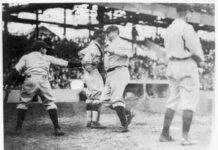
Game 5. Ruth looked terrible. A drainage tube stuck out of his arm. His wrist was taped. His legs were battered. He bunted a single in the fourth. He ran like he had nothing to lose. He scored the winning run from first on Bob Meusel’s double.
The crowd went wild when he left the dugout to catch his breath. The doctors were not wild. They told him to stop. They said playing again meant another incision. It could cripple him permanently. He was ordered out.
Then came the hate mail. Joe Vila, a sportswriter with a sharp tongue, wrote a column. He called Ruth a liar. He said the Bambino tricked the fans about an operation on his “infected elbow.”
Ruth read it at the ballpark. He stormed into the press box. He shoved his bandaged, draining elbow in Vila’s face. “Why don’t you take a picture of this and put it in your paper?”
Vila didn’t flinch. His next column said Ruth was just sensitive to criticism. That he acted like a star who demanded praise but couldn’t handle truth. Maybe. But Ruth wasn’t faking. Baseball was his life. He didn’t want to do anything else.
The Giants won the next three games. It was a best-of-nine series back then. The last one ever. Ruth pinch-hit in Game 8. Ground out.
He sat on the bench. His arm healed fast. Great athletes do. It’s part of the package. Ruth was one of the best physical specimens ever made. He bounced back quickly.
He had plans already. A post-season barnstorming tour. He was taking Bob Meusel and the rest of the Yankees on the road.