







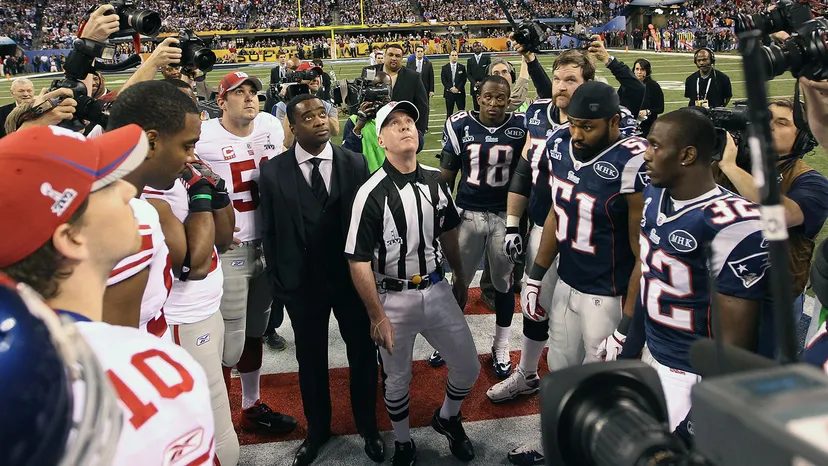
The NFL official has it rough. You watch them for forty-eight weeks getting chewed out by rabid fans while league brass looms over their shoulders. Then they finally grind their way into the postseason with perfect grades. One split-second decision in front of 100 million viewers and they are a bum. A total bum who just ruined the game. The pressure is absurd.
Who in their right mind wants this job?
Super Bowl LIII is coming to Atlanta on Feb. 3. The hype machine is loud. The New England Patriots and Los Angeles Rams are ready to battle. But the striped men on the field? We barely look at them. They are not just hired help though. These officials view the Super Bowl as the absolute pinnacle of their careers. Just like the players who earned their plaques.
Getting there is painful.
How to Qualify as a Super Bowl Referee
We need to clear up a misconception first. When people talk about “men” officiating the Super Bowl, they are literally right. Every single one of the LII games was called by men. All of them. The 2019 game in Atlanta will be no different.
This might change soon though. Sarah Thomas broke ground in 2019. She was the down judge for the divisional playoff game between the Patriots and the Los Angeles Chargers. She is the league’s first full-time female official.
But she cannot call the Super Bowl. Not yet. There are specific rules for who becomes a Super Bowl referee and they have nothing to do with gender.
The NFL has a strict five-year experience requirement for Big Game officials. Thomas just finished her fourth year. She has to wait.
There is another hurdle. Officials need an on-field assignment in three of the previous five postseasons. Or they must have called a conference championship game. That step is just below the Super Bowl. Thomas missed out on being picked for either of the two conference championship crews this year. She will have to work on that next season.
The most important factor is skill. The NFL uses a rigorous internal grading system to determine who the best officials are. Thomas proved her worth in 2018 by getting that divisional-round assignment.
Alberto Riveron, the senior vice president of officiating, meets with league office staff to shape the postseason roster. It is not just about the numbers. Ben Austro, founder of footballzebras.com, explains how the league manipulates the rankings.
“What they will do, because it’s so close [among the top officials], they will actually bump somebody up who hasn’t been to a Super Bowl and move them up into the slot,” Austro says.
This year’s game in Atlanta features three new faces. It is not strictly about grades. Subjective elements matter too.
It is not strictly on grades. They do have some ability to add some subjective elements. — Ben Austro
Leadership qualities are under the microscope. Does the official maintain the pace of the game? Are they decisive in their calls? These small intangibles add up. An official might not have the highest grade on paper. But if they show these other qualities, the league pushes them up. They become a Super Bowl official.
The Unforgiving Math of Officiating
The first hurdle is always the hardest. Getting good reviews. In a sport with the NFL’s reach, the media dissects every breath. Fans tear apart every frame. For officials, that scrutiny is unrelenting. A mistake in the postseason isn’t just embarrassing. It can end a career. It can shake the league’s credibility.
Yet the league watches them closer than anyone.
A group of supervisors reviews almost every play. In 2017, that meant 40,000 plays. Every single one gets graded. The 124 officials on the roster are scored play-by-play. They aren’t just judged on calls made. They are judged on calls missed. Position matters too. Was the official in the right spot? Were they looking at the right part of the field? Specific responsibilities exist for a reason.
The volume is staggering.
A typical official faces roughly 2,100 evaluations during a regular season. That’s not an average glance. It’s a deep dive.
“They may look at some routine play … 20 times. If there’s something a little more involved, it may be more. So it’s a very meticulous review of every single play and every [camera] feed.”
The scoring is binary and brutal. See a mistake? Minus-one. Agree with the correction? Plus-one. The tallies don’t lie.
At year’s end, the rankings split into three tiers. Bottom third? You’re on thin ice. Losing your job is a real threat. Middle tier? You’re safe. Top tier? That’s where the elite live. The gap between good and great is razor-thin. These are the officials who get the postseason assignments. The Super Bowl? That’s the top of the pyramid.
Even they slip up.
We complain weekly. Was the knee down? Did the catch stand? Where was the pass interference? It’s easy to rage. But the reality is stark. NFL officials are as close to perfect as humans get.
The accuracy rate sits above 98 percent. Austro notes the league rarely cites exact numbers, but the consensus is clear. That’s phenomenal compared to any other sport.
The Replay Reality
Instant replay dominates the narrative. It feels like the most-watched aspect of the game. Especially in the Super Bowl.
The setup is complex. An official and an assistant man the booth at the stadium. They talk to the crew on the field. They also connect with Alberto Riveron and others at the Art McNally GameDay Central replay center in New York. The chain of command is long. The communication is constant.
It often feels like replay is an intrusion. A disruption.
The data says otherwise.
In 2017, 98.9 percent of plays required no replay at all. The vast majority of the game runs on the initial call. The box exists for the outliers. Not the rule.


