


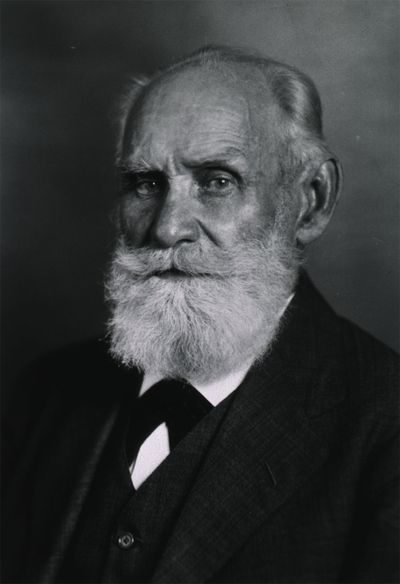
Ivan Pavlov is often remembered for a hungry dog salivating at the sound of a metronome. That image is correct. It is also a simplification. The Russian physiologist earned his Nobel Prize for work on digestion, not behavioral psychology. He only stumbled into the science of conditioned reflexes by accident.
Born in Ryazan in 1849, Pavlov was the son of a priest. He started in theology. Seminary teachers impressed him with their dedication to knowledge. He switched paths in 1870. He entered the University of St. Petersburg to study chemistry and physiology. He completed his M.D. at the Imperial Medical Academy in 1879. Dissertation finished in 1883.
He spent two years in Germany. He studied under Carl Ludwig in Leipzig and Rudolf Heidenhain in Breslau. These mentors shaped his approach to experimental rigor.
The Surgery Behind the Science
Pavlov’s early independent research focused on the circulatory system. He worked in Botkin’s laboratory in St. Petersburg. He investigated cardiac physiology. He studied blood pressure regulation.
He became an exceptional surgeon. He could insert a catheter into a dog’s femoral artery without anesthesia. The procedure caused almost no pain. He recorded how pharmacological and emotional stimuli affected blood pressure.
By dissecting fine cardiac nerves, he proved that nerves control heartbeat strength. Stimulating severed cervical nerves showed how the vagal nerves impacted the heart. This was precise work.
His personal life supported his career. He married a pedagogical student in 1881. She was a friend of Fyodor Dostoyevsky. Money was tight. They lived separately for a time. Pavlov credited his wife for his success. She managed the household. She cared for his comfort. He focused on the work.
In 1890, he became a professor at the Imperial Medical Academy. He stayed until 1924. He also founded the Institute of Experimental Medicine. There, he introduced strict surgical protocols for animals. He prioritized postoperative care. He maintained facilities for animal health. This attention to detail became standard in experimental medicine.
Digestion and the Nobel Prize
From 1890 to 1900, Pavlov studied digestive secretions. This work earned him the Nobel Prize in Physiology or Medicine in 1904.
While working with Heidenhain, Pavlov devised a new surgical technique. He created a miniature stomach pouch. He isolated the stomach from ingested food. He preserved the vagal nerve supply. This allowed him to study gastrointestinal secretions in a healthy, normal animal over its entire lifespan.
The findings were published in Lectures on the Work of the Digestive Glands in 1897. The book detailed how the body prepares for food before it even arrives.
Why Conditioned Reflexes Matter Today
Pavlov’s later work shifted toward human behavior and the nervous system. He emphasized conditioning as a core mechanism. The classic experiment involved training a dog to associate a neutral stimulus with food. The metronome or buzzer triggered salivation. This was not instinct. It was learned.
This concept of the conditioned reflex changed psychology. It moved the focus from internal mental states to observable, measurable responses. The implications extended beyond animals. They applied to human behavior.
Pavlov died in Leningrad on February 27, 1936. His legacy remains in both physiology and psychology. The Nobel Prize recognized his early work on digestion. The broader impact lies in how he demonstrated that behavior can be shaped by environment.
The dog didn’t just learn to salivate. It learned to predict. That prediction is the foundation of much of modern behavioral science.
Pavlov’s shift to human psychosis and language
Pavlov stopped looking at dogs. He started looking at people. Or at least, he tried to.
Starting around 1930, he applied his conditioned reflex laws to human psychoses. The theory was blunt. Excessive inhibition in a psychotic person is a protective mechanism. It shuts out the world. It blocks injurious stimuli that caused extreme excitation before. This idea shaped Russian psychiatry for a while. Hospitals became quiet places. Nonstimulating surroundings became the treatment.
He also declared a principle about language. Language relies on long chains of conditioned reflexes involving words. Not just words though. The function involves generalizations. Animals lower than humans cannot elaborate them. Humans can. This distinction mattered to him.
The scientist vs. the state
Pavlov’s relationship with the Soviet government was not normal. He was never a politician. He spoke fearlessly. He cared about truth.
In 1922, the Russian Revolution aftermath left conditions distressing. Famine was real. Pavlov asked Lenin for permission to move his laboratory abroad. Lenin said no. Russia needed him. He was told he would get food rations equal to an honored communist.
Pavlov refused.
He did not want special treatment. He demanded equal rations for every collaborator.
He received many honors from Soviet officials. He upbraided them anyway.
After his first trip to the United States in 1923, he denounced communism. He claimed the basis for international Marxism was false.
“For the kind of social experiment that you are making, I would not sacrifice a frog’s hind legs!”
In 1924, sons of priests were expelled from the Military Medical Academy in Leningrad. Pavlov resigned his chair of physiology. He stated he was also the son of a priest. If they went, he went.
By 1927, he was distressed. He cast the only negative vote in the Academy of Sciences against the recommended “red professors.” He wrote to Joseph Stalin. He protested the treatment of the Russian intelligentsia. He called it demoralizing, annihilating, depraving. He was ashamed to be called Russian.
In the late 1920s, he refused entry to Nikolay Bukharin. Bukharin was the Soviet commissar of education. The laboratory was funded by the government Bukharin administered. Pavlov barred him anyway.
A change in tone
During the last two years of his life, the excoriations ceased. He stated hope for government success. He hoped to see the government succeed.
Was this a change of heart? Or just reality? Increased government support for science played a role. So did patriotism. War with Japan seemed imminent.
He remained a non-communist. He never supported brainwashing techniques. Some people attribute those to him. They are wrong.
Punctuality in a revolution
Pavlov was punctual. He never missed an appointment. He arrived on time in the laboratory. Even when revolutionary activity occurred on the streets.
A collaborator once explained a 10-minute delay. The reason? Shooting.
Pavlov reacted strongly.
“What difference does a revolution make when you have experiments to do in the laboratory!”
He was a bold nonconformist. In science. In personal life. He took up the cudgel for what he believed. He did not care about the force of his opposition.
He held to scientific agnosticism. He considered true religion beneficial. He envied no one. Except his wife her devout religious faith.
The experiments continued. The state changed. The man stayed the same. Or so it seemed.
The Limits of Pavlov’s Legacy
Ivan Pavlov changed the game by studying healthy animals in their natural habitats. This approach allowed him to isolate the conditioned reflex. He stripped away the noise. Complex situations became simple experiments. But this reductionism had a cost. He ignored the subjective experience. To him, mental phenomena were only real if they could be measured physiologically. You can’t study the soul with a voltmeter. But Pavlov insisted that was the only way to do science.
His work laid the foundation for behavioral analysis. He was a giant. But he wasn’t infallible. Philosophically, he drew a hard line between the subjective world and scientific method. Yet he never clearly defined that boundary. His enthusiasm for data blinded him to nuance. He accepted psychiatric views on schizophrenia and paranoia without question. He treated neural concepts like induction and irradiation as valid for high-level thought. Today, many psychiatrists find those explanations too narrow. Neurophysiologists have moved on to electrophysiology and biochemistry.
Pavlov also stood alone. Unlike Sherrington, he didn’t have a roster of famous students outside Russia. His method—watching unanesthetized animals over their entire lives—remains an outlier. It’s not the standard. We still prioritize controlled, short-term studies. His legacy is huge. But it’s also incomplete. We are still trying to figure out how much of the mind can be reduced to reflexes. The answer might be less than we hope.