




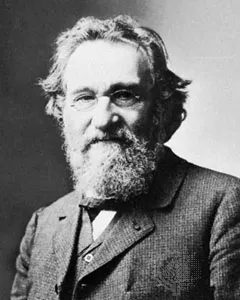
Élie Metchnikoff was a Russian zoologist and microbiologist whose work laid the groundwork for our understanding of the immune system. Born in 1845 near Kharkov, then part of the Russian Empire and now Kharkiv, Ukraine, he spent much of his life across Europe. He died in Paris in 1916. In 1908, he shared the Nobel Prize for Physiology or Medicine with Paul Ehrlich. His key discovery involved how the body defends itself against invaders.
He earned his bachelor’s degree from the University of Kharkov in 1864. Four years later, he completed his doctorate at the University of St. Petersburg. By 1870, he was teaching zoology and comparative anatomy at the University of Odessa, a position he held until 1882. This institution is now known as Odessa National Mechnikov University.
Where did the concept of phagocytosis begin?
The pivotal moment came later, when Metchnikoff moved to Messina, Italy. He stayed there from 1882 to 1886. During this time, he was studying how digestive organs develop in bipinnaria starfish larvae. He wasn’t looking for an immune mechanism initially. He was focused on embryology.
He introduced foreign objects into the larvae to see how they were handled. These objects included carmine dye particles and small splinters. He noticed something unusual. Certain cells, which had no connection to digestion, moved toward these intruders. They surrounded them. They engulfed them.
This behavior was not random. It was a systematic response. Metchnikoff recognized this as a defensive strategy. He gave these cells a name. Phagocytes. The term comes from Greek words meaning “devouring cells.” The process itself became known as phagocytosis.
Why is this discovery fundamental?
Phagocytosis is a core component of the immune response. It explains how the body identifies and neutralizes threats like bacteria. Before this, the specific cellular mechanisms of defense were largely theoretical. Metchnikoff provided empirical evidence. He showed that immunity is an active, cellular process.
This discovery changed how scientists viewed the body’s defenses. It shifted the focus from humoral theories to cellular action. It remains a foundational concept in immunology today. The cells he identified are still central to understanding how we fight infection.
The work of Metchnikoff bridges zoology and medicine. It started with starfish larvae. It ended with a Nobel Prize. It continues to influence how we understand health and disease.
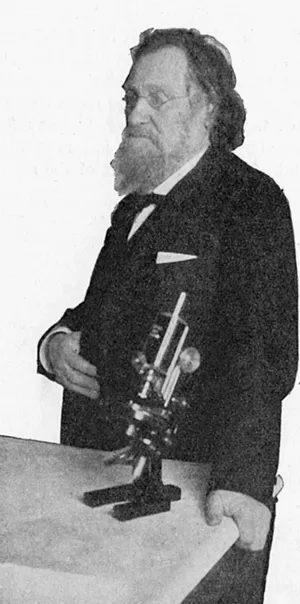
The Cellular Defense Revolution
Metchnikoff didn’t just watch bacteria from afar. He worked side-by-side with them. First at the Bacteriological Institute in Odessa (1886–87). Then at the Pasteur Institute in Paris (1888–1916). These years weren’t just about observation. They were about dismantling the existing dogma of immunology.
He saw something others missed.
The phagocyte. It is a white blood cell. Specifically, a leukocyte. Metchnikoff realized this cell was the first line of defense against acute infection. Not just in humans. In most animals.
This insight birthed the cellular theory of immunity in 1892. It was a dangerous idea. At the time, the scientific community largely subscribed to the humoral theory. They believed immunity came from body fluids. Soluble substances in the blood. Antibodies. Cells were just bystanders. Metchnikoff argued otherwise. Cells did the killing. Fluids just helped.
The backlash was immediate.
For fifty years, the humoral theory held the throne. It was the dominant paradigm. But by the 1940s, the cracks appeared. Scientists began to look closer at the role cells actually played in fighting off infections. The evidence mounted. Metchnikoff’s cellular immunity theory was vindicated.
Today, we don’t choose between cells and antibodies. We use both. The modern understanding of immunity integrates both schools of thought. What was once a fierce debate is now a unified framework.
The Longevity Experiments
Metchnikoff’s final decade was different.
He stopped focusing solely on acute infection. He turned his gaze toward a different kind of enemy. Time. Specifically, human longevity.
He became an advocate for lactic acid-producing bacteria. Not as a trendy supplement. As a biological mechanism. He believed these bacteria could slow the aging process. Or at least mitigate its effects.
His findings were compiled in several key texts. Lectures on the Comparative Pathology of Inflammation (1892). Immunity in Infectious Diseases (1901). The Nature of Man (1903).
These works weren’t just academic exercises. They were attempts to map the intersection of immunity and aging. He linked the health of the gut microbiome to the health of the whole organism. A radical idea then. A foundational concept now.
Did he solve aging? No.
But he opened the door. He showed that immunity wasn’t just about surviving the immediate threat. It was about sustaining the system over time. The phagocyte doesn’t just eat bacteria. It cleans up debris. It maintains order.
Metchnikoff saw the connection. Others were still looking for a magic bullet.