



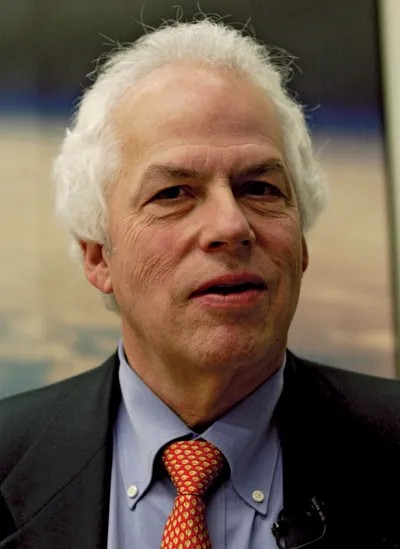
Stanley B. Prusiner changed how scientists think about infection. He discovered that a protein alone can cause disease. No DNA. No RNA. Just a misfolded piece of protein that tricks normal cells into copying the error. This finding won him the 1997 Nobel Prize in Physiology or Medicine and forced the medical world to rethink what “infectious” actually means.
Prusiner was born in Des Moines, Iowa, in 1942, but he grew up in Cincinnati. He got his A.B. from the University of Pennsylvania in 1964 and his M.D. in 1968. After four years of biochemical research, he joined the neurology residency at the University of California, San Francisco, School of Medicine in 1972. He became a professor of neurology and biochemistry there in 1974.
The patient who started it all
During his residency, Prusiner cared for a patient dying of Creutzfeldt-Jakob disease (CJD). It is a rare, fatal degenerative brain disorder. The case hooked him. He started studying a broader group of rare brain diseases called spongiform encephalopathies. These conditions cause progressive dementia and death in both humans and animals.
He set up a lab in 1974 to study scrapie, a similar disease in sheep. By 1982, he claimed to have isolated the agent causing scrapie. He called it a prion. The name comes from “proteinaceous infectious particle.”
This was controversial. Every known pathogen, like viruses and bacteria, carries genetic material. Prions do not. They consist only of protein. They replicate by converting normal proteins into the misfolded shape, like a chain reaction.
Prions are unlike any other known pathogen because they lack the genetic material necessary for replication found in all life-forms.
Why the prion theory was hard to accept
When Prusiner published his findings, many scientists pushed back. A protein-only pathogen sounded impossible. The scientific community needed proof. By the mid-1990s, however, the theory gained wide acceptance.
The turning point came in 1996 in Great Britain. A new variant of CJD appeared. People were dying of a form of the disease that looked different from classic CJD. At the same time, “mad cow disease” (bovine spongiform encephalopathy) was spreading in cattle.
The link between mad cows and human disease
Scientists suspected the new human CJD variant was linked to mad cow disease. The theory held that the scrapie agent had jumped from sheep to cattle in feed. Then, it jumped from cattle to humans who ate contaminated beef.
This species jump had precedent. If the agent could move from sheep to cows, it could move from cows to people. Prusiner’s research became central to understanding this crisis. His work also opened doors to other neurodegenerative conditions. Alzheimer disease and Parkinson disease share some characteristics with prion diseases. Whether prions play a direct role in those conditions remains an active area of research, but the connection suggests a broader role for protein misfolding in brain disorders.
From lab to life: Prusiner’s later work
Prusiner recognized early that his discoveries had real-world applications. He received the Albert Lasker Basic Medical Research Award in 1994 and the Louisa Gross Horowitz Prize in 1997.
After becoming director of the Institute for Neurodegenerative Diseases at UCSF, he founded InPro Biotechnology, Inc. in 2001. The company aimed to commercialize technologies from his lab. One key product was a test to detect prion diseases in animals and humans. It could screen for:
- Bovine spongiform encephalopathy in cattle and sheep
- Chronic wasting disease in deer and elk
- Creutzfeldt-Jakob disease in humans
Prusiner also wrote two major books. Slow Transmissible Diseases of the Nervous System (1979, co-written with William Hadlow) and Prion Biology and Diseases (2004) documented the field’s evolution.
What this means for you
Prion diseases are rare. CJD affects roughly 1 to 2 people per million per year. But the discovery matters because it rewrote the rules of infectious disease. It showed that proteins, not just genetic material, can drive pathology. That insight still shapes how we study Alzheimer’s, Parkinson’s, and other neurodegenerative conditions.
The story of prions is not just about mad cows or rare brain diseases. It is about how a single researcher’s insistence on following an odd clinical case can reshape biology. Prusiner did not set out to find a new type of pathogen. He wanted to understand why his patient died. That question led to a Nobel Prize and a new way of seeing the brain’s fragility.
Whether prions will unlock the secrets of more common brain diseases remains to be seen. But the groundwork is laid. The protein is the message. And it