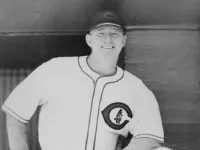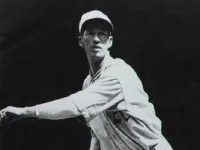




He arrived in Boston in 1914 with nothing. No money. No connections. Just a raw, untamed talent and a complete lack of sophistication. George Ruth Jr. was poor, untraveled, and entirely uninhibited.
He left less than six years later as a wealthy icon. He had a wife. A sprawling country estate. And a level of fame that probably terrified the boy who first stepped off the train.
These early years in Boston were not just about winning games. They were about coming of age. Ruth learned to navigate the sudden influx of cash and adulation. He discovered the pleasures that excellence buys. And he became one of the most recognizable faces in American sports.
Raised on hard discipline and little affection, he exploded into this new life with aggressive enthusiasm. It was messy. It was loud. It was perfect.
The Accidental Pitching Debut
Ruth was never still. So, naturally, he made his major-league debut just five hours after arriving at Back Bay Station on July 11, 1914.
He had been in Boston since 10 a.m. By afternoon, he was on the mound at Fenway Park against the Cleveland Indians.
The start was rough. He allowed two singles in the first inning. But he stabilized. He nailed a runner at home plate. He picked off Shoeless Joe Jackson at first. The inning ended without further damage.
Four months out of St. Mary’s Industrial School for Boys, the kid had the poise of a veteran.
He relied on speed. He relied on guile. He held a 3-1 lead into the seventh.
The Indians rallied. Three singles tied the game.
In his first two at-bats against lefty Willie Wilson, Ruth struck out. He flew to right field. Manager Bill Carrigan looked at the rookie and made a baffling decision.
He sent up Duffy Lewis to pinch-hit.
Lewis scratched out an infield single. He scored. The lead held.
Ruth won his first major-league game.
“At the time, however, Carrigan’s move made sense.”
It sounds insane with hindsight. Who bench a future legend in his debut?
But Ruth was a rookie. He had hit .200 in the minors. He was facing a left-handed pitcher. And pitchers weren’t supposed to hit anyway.
The tactic worked. It also set a tone.
Ruth fought for more at-bats in the weeks that followed. The team responded by sawing the handles off his bats.
He was there to pitch. Not to hit. And even that role was temporary.
The Providence Detour
Boston in 1914 was a fortress.
They had won the World Series in 1912. The core of that championship team remained. Manager Carrigan, aka “Rough,” ran a tight ship. He was the catcher. He was the coach. He was the boss.
The outfield featured Tris Speaker, Harry Hooper, and Duffy Lewis. Speaker was already considered one of the game’s greatest hitters. Larry Gardner anchored third base. Everett Scott took over shortstop, eventually playing 1,307 consecutive games.
The pitching was deep. Joe Wood and Ray Collins were the veterans. Ernie Shore, Dutch Leonard, and Rube Foster were the bright young sparks.
In this environment, Ruth was expendable.
He was demoted in August to the Providence Grays. The Grays were an International League team owned by Boston’s Joe Lannin.
His teammates didn’t care.
Despite the media hype around the “$10,000 baby,” the locker room disliked him. They called him crude. They hated his wild eating habits. They viewed his carefree style as lazy.
These traits would later win him millions of fans. In August 1914, they got him sent down.
One incident stands out. During warm-ups, a ball rolled toward him. Wood yelled for help. Ruth intentionally let it roll between his legs. He spread his arms in an exaggerated pose.
Wood exploded. Carrigan had to intervene.
Ruth used the frustration to focus on Helen Woodford. He met the 16-year-old waitress at a coffee shop on his first day in town. They were dating regularly when the demotion order arrived.
Redemption in Rhode Island
Providence was 40 miles south of Boston. The crowd was massive.
On August 20, Ruth pitched before 12,000 fans. It was the largest crowd to ever watch a baseball game in Rhode Island.
He won 5-4. He tripled twice.
The performance launched Providence to the pennant. Ruth went 9-2 in less than a month.
Boston recalled him for the final week of the season. Carrigan started him again.
Ruth got his first major-league hit. A single. He also secured his first victory against the hapless New York Yankees.
Nobody in Boston really noticed.
Up the street, the Braves were completing a miraculous last-to-first climb. They were about to sweep the Philadelphia Athletics in the World Series.
Ruth’s debut win was a footnote in a city obsessed with a different kind of magic. But the foundation was laid. The boy from Baltimore had survived his first test.
He was just getting started.
The rough patches didn’t define the year. They barely registered against the sheer volume of change. George Ruth walked out of St. Mary’s in May as a poor kid with a foul mouth. He stumbled back into Baltimore six months later as a local celebrity. The stats told the real story: 23 wins and 8 losses in the highest tier of minor league baseball. Then came the jump. Two wins, one loss in the big leagues.
The Rookie Year That Changed Everything
He had fallen in love. He married Helen in October. The money was staggering. He went from a $600 salary to $3,500 in a single season. He spent it as fast as it hit his hand. That is the classic rookie trap. You get the check, you buy the car, you lose the car. He got his first license. He had his first crash. It was a blur of speed and consequence.
But the cash wasn’t the point. Not really. The point was the road. The big cities of the East Coast opened up to him. He realized shirtmaking and playing ball were just the beginning. There was a whole world out there he could claim. He was done being told what to do. He was ready to figure out how much of it he could own.
Where to Find More Baseball History
Looking for the next big moment? The first major league home run is coming up next.
If you want to dig deeper into the game:
– Baseball
– Minor League Baseball
– Baseball Hall of Fame