




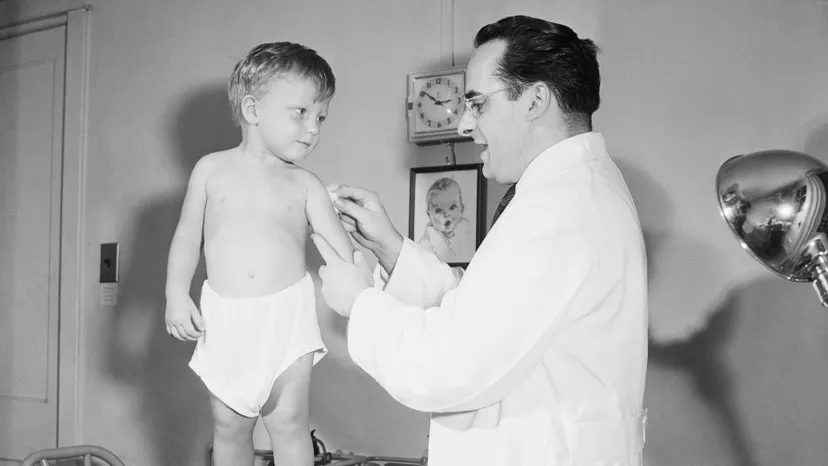
You roll up your sleeves and wait for the usual deltoid muscle nudge. The nurse comes in. He doesn’t ask you to raise your hands. He asks you to bow.
Or maybe he rubs your belly.
It feels very relaxed. It felt like a curve ball. But this is not the case. The injection site is calculated and determined based on three main factors: drug type, dose and desired rate of absorption.
How drugs move through the body
Not all needles are created equal. These are tools designed to deliver drugs to specific layers of the anatomy, each with different vascular properties.
Intravenous (IV) injections bypass the skin and fat completely. A needle is inserted into a vein, usually in the arm or elbow. The results were immediate. This drug acts directly on the blood. It is a medicine that works “now”. Antibiotics, diuretics, and strong pain relievers often use this route.
Intramuscular (IM) injections For deeper injections. The needle pierces the muscle tissue. Although the blood vessels here are denser than in fat, the drug still needs to dissolve and enter the bloodstream. It is absorbed faster than fat, but slower than intravenous injections. Common sites include:
Shoulder muscle.
Gluteus medius of the buttocks.
* Vastus lateralis of the thigh (muscle commonly used by babies).
Subcutaneous (SubQ) Injections are made into the fat layer under the skin. Circulation here is scarce. Absorption is slow and steady. This is belly fat or adipose tissue behind the arms. Insulin and certain hormones use this pathway.
Intradermal injections are the most superficial. The needle is inserted into the middle layer of the skin. Absorption is the slowest. These are located on the inside of the forearm or under the shoulder blades. The tuberculosis test is a classic example.
Why buttocks? Why belly?
The choice of site is based on pharmacology rather than convenience.
“Some drugs have to be absorbed slowly,” says Libby Richards, an assistant professor at Purdue University’s School of Nursing. “Adipose tissue, which has less blood flow, is more effective. Medicines injected into a muscle are absorbed faster than in adipose tissue, but more slowly than those injected intravenously.”
The quantity is also important. Muscle tissue can stretch and retain more water than subcutaneous fat. If your doctor has to inject a large amount of medicine, your arm may not be big enough. Larger reservoirs form on the thigh or buttocks.
Irritation is another factor. Some medicines can irritate sensitive blood vessels. Direct injection into a vein or superficial tissue can cause damage. Muscles provide cushioning. they are very tolerant.
“Due to the amount of medication, large muscles such as the hips or thighs can be used instead of the arms. In addition, some medications can irritate sensitive blood vessels. Again, muscles take priority.”
Relationship with the immune system
There is a biological reason why vaccines often go into the muscle. The muscles just don’t move. They are the center of the immune system.
Muscle tissue contains immune cells that immediately recognize antigens. Once the vaccine is placed there, the cells start working immediately. They capture threats and present them to other parts of the body’s defense network. Adipose tissue does not have the same immediate alarm system.
Can I choose?
Yes, but there are limitations.
Patient preferences matter. Easier access to hands. That way it becomes less of a hassle. Most people like it. If the drug is allowed and the muscle size is appropriate, the default site is the arm.
But does the drug need to be absorbed under the skin? The target is the stomach. What if the dose is high? This leads to thighs and buttocks.
You can contact your doctor. Your doctor will do his best to accommodate you. However, if a drug requires a specific absorption profile, its destination is determined by anatomy.
Your body is the landscape. The needle just needs to find the right path.