








Walking the course, rather than riding in a cart, transforms golf from a passive pastime into a potent cardiovascular workout. For older adults, this low-impact activity protects joints while burning calories and maintaining bone density. If you are just starting, ignore the distance. Focus on duration. Add a few minutes to your walk each time until you reach 30 to 60 minutes, three or four times a week.
But what if your knees won’t allow for that kind of walking? Golf remains beneficial. The swing itself demands balance, strength, and flexibility. Plus, the social element of hitting balls outdoors is a mental health booster in its own right.
The real secret to longevity in golf isn’t just playing; it’s training. Specific exercises can fortify the muscles used in the swing and, more importantly, prevent the injuries that often sideline senior players.
“Exercising the muscles you use in your golf game can be beneficial at any age, and seniors are no exception.”
Age brings a natural decline in endurance, strength, balance, and flexibility. Targeted golf exercises counteract this decline. By focusing on the ankles, hips, and shoulders—the primary stress points in a swing—you can maintain mobility and reduce pain.
Strength and Stretching Golf Exercises
A effective routine targets the most vulnerable areas for older golfers: the ankles, hips, shoulders, legs, and back. Here is how to address them.
Shoulders
Strong shoulders drive the swing. Use a rowing machine or perform dumbbell rows. Start light. If a dumbbell feels too heavy, use a small weight or no weight at all. Increase the load only as your strength improves.
For flexibility, try the “golf twist.” This move mimics the rotation of a swing, improving your range of motion. Hold a medicine ball if you can; otherwise, use a water bottle or nothing at all until you are stronger. Simple shoulder rotations, forward and backward, also help.
Ankles and Calves
Stability starts at the ground. Perform seated ankle rotations in both clockwise and counterclockwise directions. Standing calf raises add strength. Don’t overlook stretching; calf stretches improve ankle flexibility by loosening the surrounding muscles.
Hips and Legs
Squats and lunges build lower-body power. Georgia State University offers detailed instructions on proper form for these moves. To improve hip flexibility, try hip drops or seated hip stretches, as recommended by the Mayo Clinic.
Quadriceps
A simple quad stretch with torso rotation improves balance and mimics the swing’s mechanics. If your balance is shaky, do this stretch near a wall for support.
Yoga Poses for Flexibility and Balance
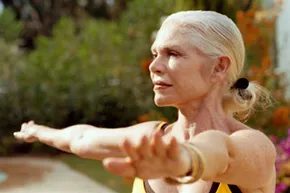
The real magic happens when you stitch your weekday practice into your weekend rounds. If you actually did those exercises last week, your game on the green will likely reflect the effort. But don’t just roll out of bed and head to the first tee. You need to prep. Spend fifteen to twenty minutes warming up. Start with a short walk to get the blood moving. Then hit a few yoga-inspired stretches.
Yoga seems an odd partner for golf. The sports couldn’t be more different in spirit. Yet gentle yoga stretches do something specific for your body. They tone the muscles you use to swing. They expand your range of motion. They sharpen your balance. And that matters. Better balance prevents injury. It keeps you on the course longer.
Try these moves carefully. Move slowly until you understand how they feel.
Targeting Stability with the Chair Pose
The chair pose is deceptively simple. It targets your ankles first. Your feet grip the ground. Then it strengthens your legs. You feel the burn in your quads. But the real win is balance. Standing in this pose forces your core to stabilize. It mimics the stance you need in the final phase of your swing.
Loosening the Hinges with Cat and Cow
Your spine is a hinge system. Golf requires rotation. Cat and cow postures limber up your shoulders and back. You move through flexion and extension. It’s not about strength here. It’s about mobility. A stiff back leads to a compromised swing. A mobile back allows for a full, fluid rotation.
Unlocking the Torso with the Spinal Twist
A seated spinal twist helps increase range of motion in your spine and shoulders. Think about your swing path. You rotate your torso to generate power. If your spine is locked, you lose power. You also risk straining a disc. This twist readies your body for that rotation. It oils the gears before you swing that golf club.
Building the Core with the Plank
The plank pose improves your balance and builds shoulder strength. It’s an isometric hold. Your body forms a straight line. Your core engages to keep you from sagging. This stability translates directly to control. When you’re swinging, a strong core keeps your head steady. A steady head keeps the clubface square.
Power and Reach with the Warrior Pose
This warrior pose strengthens your arms, legs, ankles and core while stretching the arms and improving range of motion and balance. It’s a full-body connector. You’re standing tall. Your legs are strong. Your arms are extended. It mimics the follow-through of a drive. It builds endurance in the muscles that fire last in your swing.
Safety First, Then Structure
Of course, you’ll want to talk to your doctor before starting any new fitness routine. This is non-negotiable. Especially if you feel dizzy, weak or fatigued. Your body might be sending signals you can’t ignore. Get the all-clear first.
Once you have that green light, structure matters. Don’t work out the same sets of muscles two days in a row. Recovery is part of the gain. You need to mix up your routine. Try this split:
- Strength training on Monday and Wednesday.
- Stretching or yoga on Tuesday and Thursday.
Or split it


