





The internet hands kids a key to the entire world. They learn to surf before they learn to tie their shoes. Why look up a fact in a book when a search engine gives you the answer in seconds? Social networks let them stay connected to friends, no matter how many miles separate them.
But is this level of access actually safe?
Facebook says no.
Their safety guidelines are blunt about it. They don’t just discourage young users. They ban them. The platform enforces a hard age limit: you must be 13 years or older to create a profile. Users under that age are not permitted access at all.
This rule feels contradictory if you only look at the surface.
Farmville. Happy Aquarium. The graphics are cartoonish. They look like children’s games. Yet the core platform remains a serious networking tool designed for older demographics. The disconnect between cute game icons and strict age gates creates confusion for parents and kids alike.
To understand why the barrier exists, you have to look at the site’s origin story. It wasn’t built for the masses initially.
Mark Zuckerberg launched it in 2004. The name was simple: “the facebook.” It started as a digital directory for Harvard University. Students and faculty used it to map relationships. It spread to other colleges rapidly. For the first two years, the door was locked to anyone outside the university ecosystem.
In 2006, the gates opened.
The platform expanded to anyone with a registered email address. There was just one condition. You had to be at least 13 years old.
Facebook wasn’t designed with children in mind from day one. The architecture, the privacy settings, and the social dynamics were tailored for teens and adults. It is no surprise that the site doesn’t fit the developmental needs or safety requirements of a younger child.
Facebook Safety Precautions
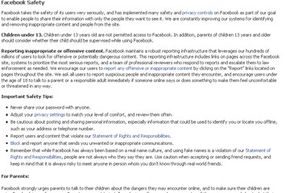
Facebook was built for connection. You join to see old faces. You add new ones. You share your life. But that open door has a shadow side. Predators use these networks to find targets. The platform has tightened its privacy controls. It is easier now to block strangers. Yet the core purpose of social media remains: it is a tool to be found.
This tension creates a minefield for users. Especially for younger ones.
The Limits of Platform Safety
Facebook forbids offensive and dangerous material. That is a clear policy. But enforcement is imperfect. No site can stop every bad actor in real time. Users post links. They share videos. They send direct messages. Depending on privacy settings, this content can spread to friends’ feeds.
Some of it violates the rules. Much of it does not. But a significant amount slips through the cracks.
“Inappropriate material does find its way onto the site regularly.”
When bad content appears, Facebook offers tools. You can block the user who posted it. You can flag the content for review. A team of professionals reviews these flags. Still, the flow of inappropriate material is constant. The platform cannot scrub every instance before it is seen.
Privacy Is a User Responsibility
The bigger risk lies in what you give away. Facebook lets you choose your visibility. A public profile exposes everything. Anyone searching can see your birthday. Your home address. Your phone number. They can see your school. They can see your friends list.
Facebook does not protect you from your own oversharing. The site suggests parents talk to kids about web safety. It recommends monitoring software. These are starting points. They are not guarantees.
Ultimately, user safety rests with the user. And for minors, it rests with the parent.
Parental Oversight Is Non-Negotiable
Facebook is a microcosm of the web. It has the same risks. The same benefits. Education and communication are the only real shields. Without them, children stumble into trouble.
Parents should research kid-friendly alternatives. Reserve Facebook for when children are older and safer. Monitor their activity. Install tracking software if needed. Have the hard conversations.
The Bottom Line
Facebook can be fun. It can keep you connected. But it requires vigilance. Platforms provide tools. Users must wield them. Parents must guide their children.
The internet is not inherently safe. It is only as safe as the people using it.