






Artificial light changes everything. Or almost everything. We have lit up the sky so thoroughly that 80% of us live under polluted nights. The numbers creep up each year. Scientists have watched birds lose their rhythm, sea turtles get confused, and flowers bloom at wrong times. It is the same story over and over. Light scrambles the biological clocks creatures use to stay synced with nature.
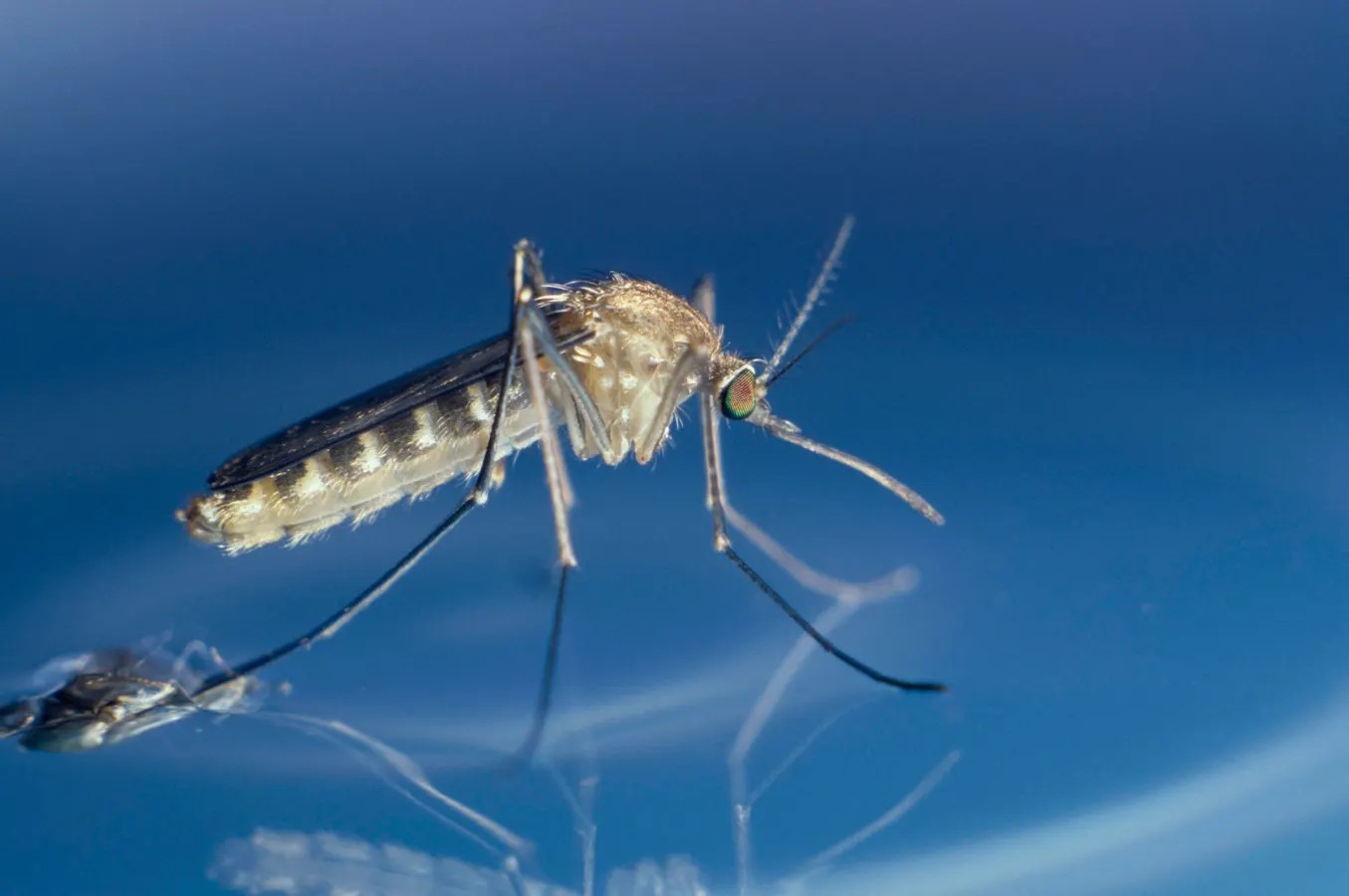
Now look at the northern house mosquito. Culex pipiens. It is the main carrier of West Nile virus across the Midwest and Northeast. A new paper in the Journal of Applied Ecology asked a simple question: What does porch lighting do to its winter sleep?
The answer is harsh. Dim lights stop them from sleeping. And they do it better than global warming ever could. In October. While they should be dormant, they are still biting. Still drinking blood. Still making eggs.
The Broken Signal
Here is how it works naturally. When days get shorter, female mosquitoes hit the brakes. This is diapause. A state of total developmental arrest. They stop hunting hosts. Egg production halts. They fat up and find a cozy spot to hide. Dead to the world, essentially. While asleep, they cannot pass on diseases. This natural shutdown is why West Nile cases usually drop off a cliff in October.
It is not about temperature. Not really.
Temperature lies. One November can be cold, the next one hot. A bug betting on temperature for winter prediction would die out often. Day length never lies. October 15 is always the same. It is the most honest cue an organism has. Most temperate insects use light as the big button for sleep. Temperature is just the fine-tuning dial.
City lights push the button the wrong way.
To a mosquito larva sitting under a porch lamp, it looks like a very long summer day. The signal is false. It responds accordingly. No dormancy. Full reproduction. Activity.
Testing in Columbus
Researchers at Ohio State wanted to see if this theory held water in real life. Not just in a lab cage with a fluorescent tube above it. They set up enclosures across Columbus. Residences. Schools. Churches. Two autumn seasons long.
They put two boxes on every site. One box near a light. One box in the dark. The lights were real stuff. Garage lamps. Garden paths. Porch fixtures. The brightness? Roughly five lux. Barely any light at all. By scientific standards, it was dark.
September results showed the battle between heat and light. In the dark boxes, warmer nights meant fewer mosquitoes went to sleep. Heat does its usual job, confusing them slightly. In the lit boxes? Heat did nothing. Light overrode the temperature signal completely. The thermal cue became irrelevant.
October was even more brutal.
Every mosquito in the dark enclosures entered dormancy.
In the light-exposed boxes? 41% refused to sleep.
That 41% mattered. When researchers offered them a meal back in the lab, many bit. Many laid eggs that hatched. They were essentially living their reproductive lives through early winter because a porch light told them summer wasn’t over.
Why Light Wins
We know cities are heat traps. The Urban Heat Island effect is real and measurable. Warmer nights have always been blamed for extending mosquito seasons. It makes sense intuitively. If it is warm, things stay active.
But heat has been variable for hundreds of millions of years. Insects have learned to dance around temperature shifts. They have plasticity. They adapt. Light-dark cycles, however, have been rock solid. Evolution built deep, rigid genetic switches for daylight. There is no evolutionary playbook for artificial light at midnight. No buffer against it.
Moths behave the same way. Tiger mosquitoes too. Some birds stay confused for months.
This study adds a crucial comparison. Light pollution beats urban warming. Even at low levels. Ordinary residential lighting wins the fight to keep pests awake.
The Disease Problem
So what happens when the mosquito season extends?
Risk goes up. But that is just side one of the coin.
Look at the birds. House sparrows are the urban reservoir for West Nile virus. A previous study showed these birds stay infectious for two days longer if exposed to artificial night light. Why? Circadian disruption. Their immune genes get confused. They fight the virus too early, too messily. They never clear it cleanly.
Light-exposed birds maintained transmissible viral loads when control birds had already recovered
Then look at Florida. A 2021 analysis showed artificial light predicted West Nile exposure better than population density. Better than paved surface area. Better than standard “urbanization” metrics.
We are seeing a pincer movement on public health. On one side, the vector (the mosquito) stays active later because of the light. On the other, the host (the bird) stays contagious longer because of the same light.
Has anyone modeled these two factors together?
Not really. We are guessing how much this combined effect increases outbreak potential. We know the lights stay on. We know the bugs don’t sleep. The math for the consequences is still missing pieces. 🦟


