







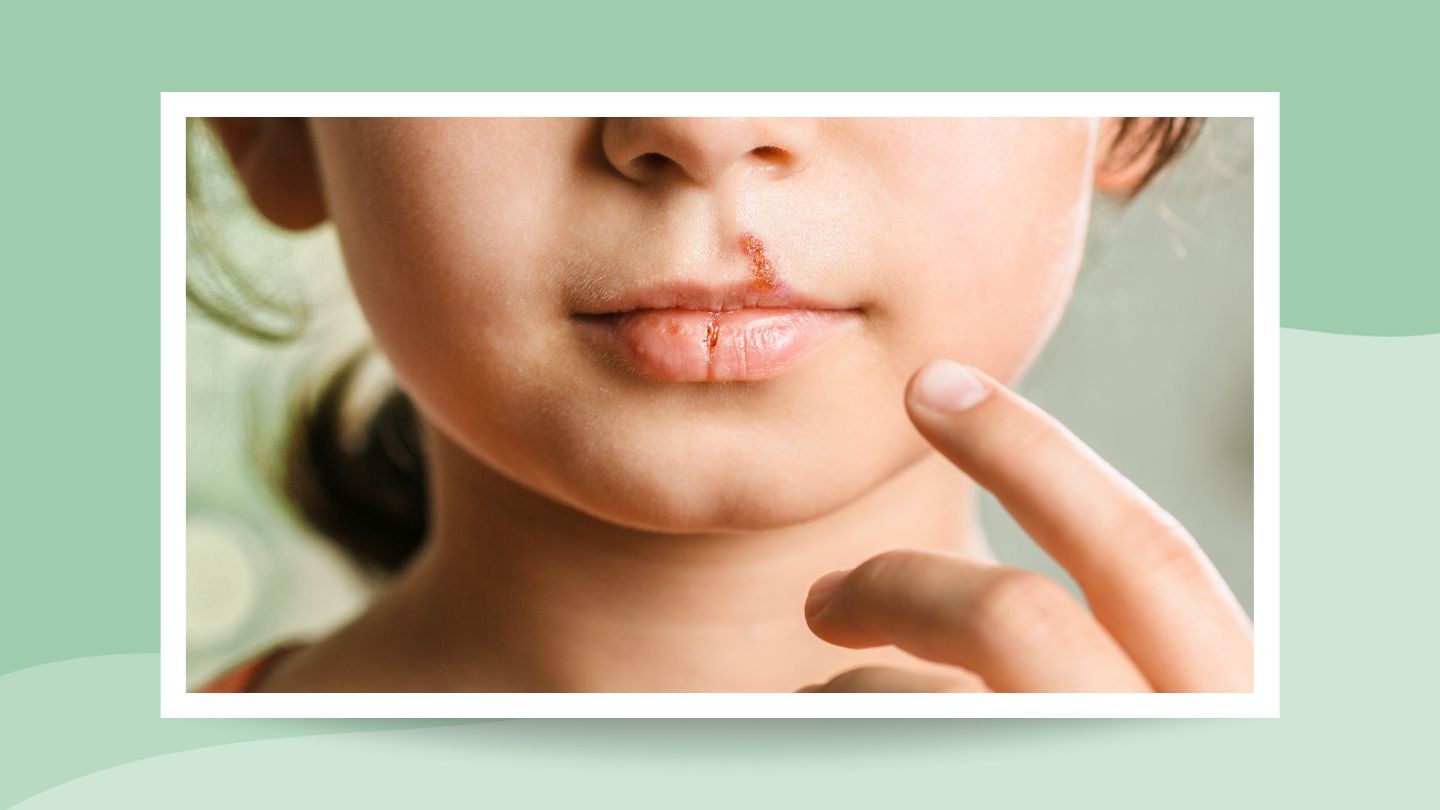
Cold sores are usually just annoying. A blister or two on the lip. It heals. Life goes on.
But for kids with atopic dermatitis? It is different. Much worse.
The herpes simplex virus type 1 (HSV-1) causes cold sores. In a healthy kid, it stays local. In a kid with eczema, it can trigger eczema herpeticum. This is a widespread, painful infection that demands immediate medical attention.
It spreads fast. Really fast.
“It can spread pretty rapidly on areas of open and inflated skin.”
— Dr. Teresa Wright, pediatric dermatologist
Why does this happen? How do you spot the difference between a normal flare-up and a viral emergency? And what exactly should you do when it happens?
Why Atopic Dermatitis Breaks Down the Skin Barrier
Healthy skin is armor. It keeps viruses out.
Atopic dermatitis breaks that armor.
Dr. Jody Levine, a pediatric dermatologist in NYC, explains it simply. The barrier is disrupted. There are tiny cracks. Germs slip right in.
Kids are already vulnerable. Their immune systems are developing. Their skin is thinner than adults’. Add moderate-to-severe eczoma to the mix, and the risk spikes.
It’s not just about the cracks. It’s about the defense. The skin’s immune response is weaker in kids with eczema. The virus doesn’t just stay on the lip. It infects large patches of skin where the barrier has failed.
How to Spot Eczema Herpeticum vs. Regular Eczema
You need to know what you are looking at. A normal flare-up is itchy. Dry. Red. Maybe scaly.
Eczema herpeticum is different. It is a viral infection. It hurts.
Here is the breakdown.
Signs of a normal atopic dermatitis flare:
* Dry, flaky skin.
* Colors range from pink to purple, brown, or gray depending on tone.
* Intense itchiness.
* No fever. No chills.
* No blisters. Just bumps or thick patches.
Signs of eczema herpeticam:
* Pain. Not just itch. Real pain.
* Clusters of small blisters. Red. Purple. Or black.
* They look like hole-punch marks. All the same size.
* They ooze pus when they break.
* Crusty skin forms over older blisters.
* High fever and chills.
* Swollen lymph nodes.
* General malaise. The kid just feels sick.
* A cold sore on the upper lip might be present.
The timing matters too. Symptoms usually appear 5 to 12 days after HSV-1 exposure.
Immediate Steps if You Suspect Eczema Herpeticum
Do not wait. Call the pediatrician. Or the pediatric dermatologist. Now.
If you can’t get a quick appointment, go to urgent care or the ER.
Do not use topical steroids.
This is critical. If you have a tube of prescription steroid cream, put it away. It does not work for viral infections. It might actually make things worse by suppressing the local immune response and letting the virus spread.
Dr. Wright warns against this. “Topical steroids can promote the spread of the infection on the skin.”
The doctor will likely do a physical exam. They might swab a blister to confirm HSV-1 in a lab. Sometimes they can just tell by looking.
Antiviral medication is the treatment. Oral meds work best.
“If there are lesions on the eyelids… the child should be seen urgently by ophthalmologist.”
Eye involvement is serious. Herpes in the eye can cause lasting damage. If the rash is near the eyes, treat it as an emergency.
Prevention Tips for Parents With HSV-1
You can catch cold sores without knowing it. The virus can be asymptomatic. You have no sore. But you still shed the virus.
If you have atopic dermatitis kids at home, you have to be careful.
Here is how to stop the spread:
- No kissing. If you have a cold sore, or even if you don’t but suspect exposure, don’t kiss your kids on the face.
- Stop sharing stuff. No shared cups. No shared utensils. No shared toothbrushes.
- Separate linens. Towels and bedding should not be mixed.
- Hand hygiene. Wash hands often. Especially after touching your own face or a cold sore. Have your kids wash hands too, especially if they’ve been near someone with a cold sore.
Managing the eczema itself is part of the prevention. An intact skin barrier is a strong barrier against viruses. Keep the eczema under control. Less inflammation means fewer cracks for HSV-1 to enter.
Early treatment works. Antivirals are highly effective if caught quickly. But they only work if you act before the virus takes over.
So you keep the skin healthy. You wash your hands. You watch for those hole-punch blisters.
Because in this case, waiting is not an option.


