







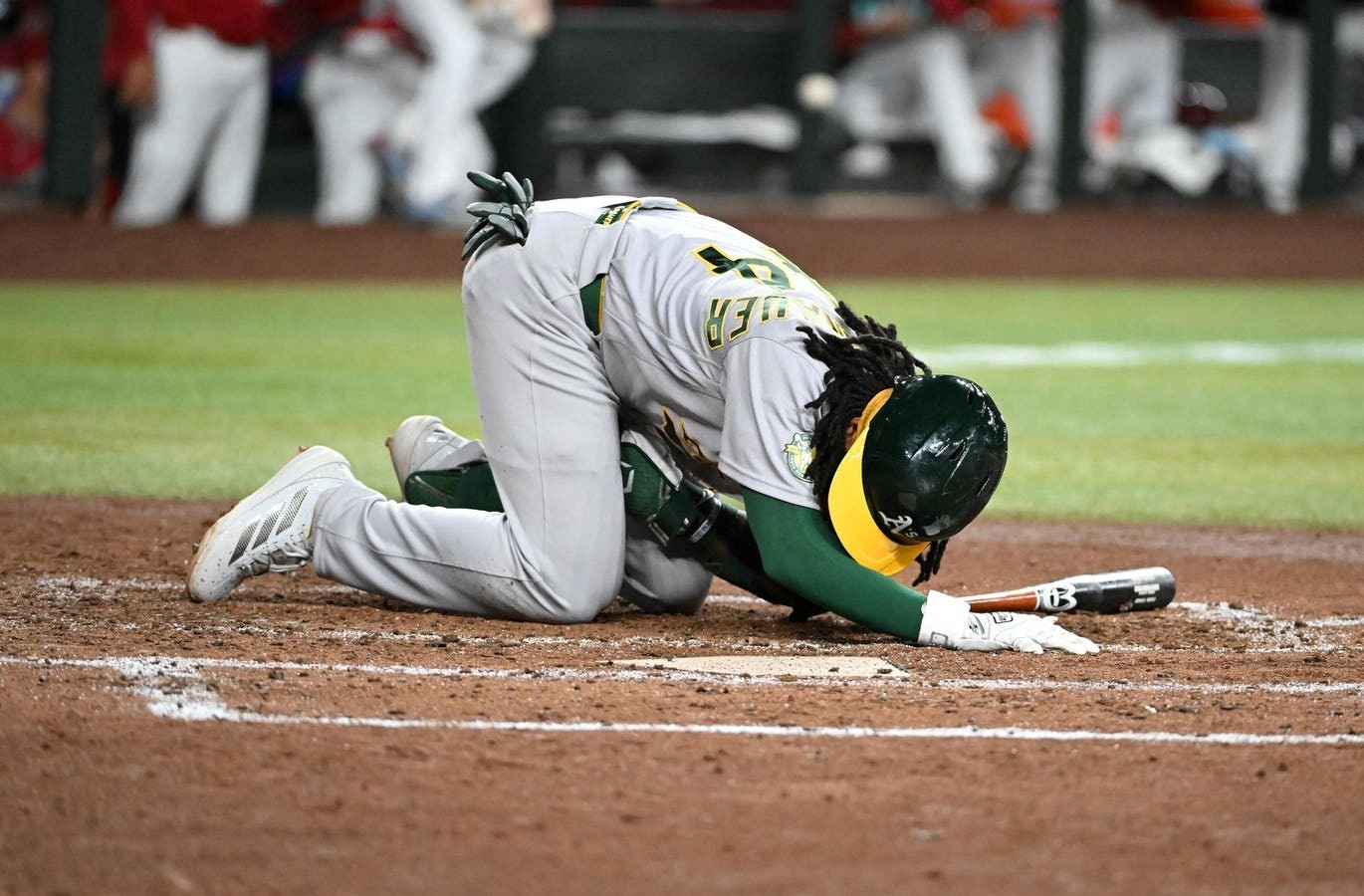
A’s rookie shortstop Joshua Kuroda-Gaue didn’t just have a bad inning. He had a medical emergency that most people hope to never experience.
During a game against the Arizona Diamondbacks, the ball went foul. Hard. Right into his groin.
That single impact caused a testicle rupture.
How He Stayed In The Game (And Why He Shouldn’t Have)
The story gets weird right after the injury.
Kuroda-Grauer hit the foul ball. He collapsed. Painful? Absolutely.
But then he got up. He stepped back into the batter’s box. He hit the next pitch for a single.
This wasn’t stubbornness. This was adrenaline, or perhaps shock, or maybe just the sheer disbelief that your anatomy had failed mid-swing. He stayed in the game for another half-inning.
Eventually, the pain became too much to ignore. He had to come out.
Originally, the team suspected a simple contusion. A bruise. An ultrasound changed the diagnosis entirely: ruptured testicle.
Emergency surgery followed within hours.
It’s a stark reminder of something we all know intuitively but rarely discuss with medical seriousness: if you get hit there, stop. Don’t try to play through it. The idea that you can “tough it out” applies to blisters. Not to torn tissue.
What Actually Happens When You Rupture A Testicle
You might think you know pain. You don’t know that pain.
The testicle is wrapped in a tough, fibrous layer called the tunica albuginea. Latin for “white coat.”
When that layer tears—like peeling back an orange skin—the sensitive tissue inside is exposed. The nerve endings in that area are dense. The pain is immediate. It is intense. It is, for lack of a better clinical term, absolutely horrific.
The primary symptom of a ruptured testis is severe pain.
Beyond the agony, the physical signs are unmistakable.
The testicle may change shape. It might feel misshapen or softer than usual due to swelling. You might see significant discoloration.
But the pain is the main event. And it doesn’t just go away.
Why Surgery Is Urgent (Not Optional)
This isn’t a “wait and see” injury.
The tunica albuginea protects vital structures. It keeps blood flowing and sperm-producing tissue safe. When that barrier breaks, sensitive tissues are exposed. They can be damaged by friction or movement.
Blood vessels can tear too.
Bleeding in that confined space is a problem. The accumulated blood (hematoma) puts pressure on the remaining healthy tissue. It compresses blood supply. It causes more damage.
The clock is ticking.
The longer you wait to get surgical repair, the lower the chances of saving the testicle. Permanent damage is a real risk. In severe cases, the testicle cannot be saved. Removal becomes the only option.
The Surgical Fix
Emergency surgery involves opening the scrotum. Surgeons expose the damage.
They stop the bleeding. They remove any dead or damaged tissue. Then comes the delicate part: sewing the tunica albuginea back up.
It’s like patching a tire. Except the tire is a blood vessel and the patch needs to hold fluid pressure.
Doctors use an ultrasound afterward to check if normal blood flow has returned. If the color returns to normal, that’s a good sign. It means the testicle is viable.
The goal is preservation. Saving as much functional tissue as possible.
Recovery And Long-Term Outlook
Surgery isn’t the end of the line. It’s the beginning of a long heal.
Pain might ease, but you can’t rush back into action. Doctors recommend waiting at least two weeks. Often longer. Any strenuous activity risks re-rupturing the repair.
Kuroda-Grauer seems to be recovering well. Manager Mark Kotsay reported the rookie is in “great spirits” at the hospital. Resting. Healing.
For others, the outlook depends on the damage.
If a significant portion of the testicle had to be removed, or if tissue died from lack of blood supply, the testicle might shrink. Atrophy is possible.
Will it affect fertility or testosterone levels? Maybe not. The body is resilient. If the other testicle is healthy, it often compensates. It picks up the slack. Sperm production and hormone levels can remain normal despite a unilateral injury.
But that’s luck. Not a guarantee.
Can You Prevent A Rupture?
You can’t control being hit. Sports are contact. Balls fly.
But you can wear a cup.
Yes, even if it’s uncomfortable. Especially if it’s uncomfortable. A protective cup is the only reliable barrier against direct trauma to the groin.
Also, stop leading with your groin. It seems obvious, but shock makes us do weird things. Awareness helps.
Fortunately, testicular ruptures are rare. They don’t happen in everyday life unless there’s significant trauma.
So you don’t need to walk around paralyzed by the fear of rupturing a testicle.
But if it happens?
Don’t be like the baseball player who played through a single.
Go to the ER. Now.


