




The story begins in 1818, when engineer William Cupid enters a British prison. He saw the prisoners walking in the garden. This bored him. So he built a machine.
It forces them to walk on spinning blades. The act of crushing corn. or release water. The guards loved it. The work is monotonous. This reduces the quality. It worked.
Today, every gym has the same machines.
Cupid introduced the first modern treadmill. The design has been changed. We don’t have that intention yet. Many people are still afraid of it. If you get tired of running on the spot. There are better ways to travel.
Workouts for adults
More fun training is also available. It is also more innovative. Why insist on using prison equipment?
There are alternatives. That doesn’t seem like a punishment option.
This is part 1 of a total of 9 parts.
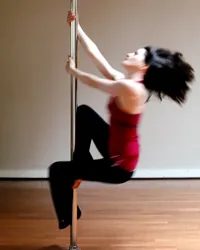
The real workout behind the #stripperfitness classes
Block the noise. Some women go to the gym because they want to look good in their underwear. Honest. But that doesn’t mean they want to train in lingerie.
You might think that Crunch Fitness classes like “Cardio Striptease” and “Turning Tricks” are about learning how to please your partner. They aren’t. The premise is simple. Women keep their clothes on. They engage in routines designed to make them feel comfortable in their bodies.
The goal is empowerment, not exploitation.
These classes aren’t just about feeling sexy. They provide a legitimate physical challenge. Advanced pole moves require upper body strength that most people don’t realize they have. It’s a workout. It’s tough.
The confidence you gain often spreads to other areas of your life, such as the bedroom. But the main driving force is self-assurance. It’s about owning your own space. And your body.
9: Circus Workouts
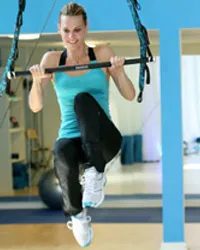
Circus Fitness Reality
Forget sawdust and smell. You don’t have to flee to the big top to get your heart rate up. Walk to the nearest fitness center. Some places have classes that combine juggling, tumbling and trapeze. It’s a confusing mix. But if you’re looking for authenticity, there’s only one option. Cirque du Soleil endorses a single program. Its name is Jukari Fit to Fly.
This special program has been developed in collaboration with Reebok. You can find it at Equinox gyms. The equipment has been changed. It is safer for the general public. Not all of us are born with the reflexes of a professional aerialists. You can easily try tricks with these machines. How about flying on a trapeze like a brave young man? Exercise your upper body. It also strengthens the abdominal core muscles. Turn your childhood fantasies into manageable movements.
Karaoke workouts
There is also the other end of the entertainment spectrum. Loud music. Singing. Moving. Karaoke workouts has become more and more popular in recent years. The concept is simple. You can workouts and sing at the same time. It’s ridiculous. Maybe so.
The appeal lies in the distraction. Singing requires different muscles than standard cardio. Your diaphragm works harder. The core is stable and support your voice. You might burn calories differently. Or maybe you just feel silly. Yelling into a microphone while running on a treadmill has psychological benefits. It breaks the monotony.
Not all gyms offer this service. However, those who do often report higher energy levels in the room. Participants tend to be more engaged. They laugh. They sing off-key. The atmosphere changes from sterile to sociable.
Why is the circus trendy?
Why are gyms pivoting on the performing arts? This is not just a matter of novelty. People are tired of ordinary treadmills. They want something that feels like play. Circus skills require concentration. You can’t think about email when you’re balancing on a hoop. It forces mindfulness.
Changing equipment lowers the barrier to entry. Traditional trapeze work is dangerous. This takes years of workouts. The gym version uses a harness and lower heights. They reduce the fear factor. This way more people can try it.
Jukari Fit to Fly is a good example. It bridges the gap between professional spectacle and amateur fitness. It promises tone and strength. A little magic is also promised.
Verdict
Is it better than weight lifting? Probably not just for building muscle. Is it better than steady state cardio? Maybe not for full endurance. But the situation is different. Variety prevents burnout. If you stick to the same routine, you will quit. Circus-inspired workouts offer variety.
Karaoke sessions are also available. Add a layer of emotional release. Exercise becomes more than physical. It becomes mental and social.
Some studies suggest that singing can lower cortisol levels. Stress goes down. Endorphins rise. Combining this with movement can create a unique hormonal response. Science has not yet caught up. The anecdotal evidence is strong. People feel better after these sessions.
Do I have to join a circus to benefit? No, you need to be willing to look foolish. The gains are real. The fun is real. The rest is just marketing.
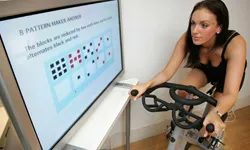
Most of us know that drill. A glass or two of Liquid Courage makes shower karaoke bearable. Do you use the same approach in spin class? This is usually undesirable. You have to pedal, not play. But more and more exercisers are preparing to take two different phases at once, taking only water or an energy drink with them before training.
A small screen attached to the handlebars of the exercise bike shows the lyrics of classic songs. It’s a combination of aerobics and karaoke. The jump is not as big as it seems. Aerobics and cycling coaches have long used upbeat tracks to improve heart rate and morale. The difference here is participation.
Trainers often create playlists to help people focus on burning their legs instead of wearing sweaty tops and trying to win “American Idol.” Sometimes the coach himself takes the microphone and proves that he knows how to lead with rhythm without compromising the form.
If the general standards don’t work, take a closer look at your schedule. The gym floor is becoming a stage for gospel-inspired spinning movements to dance workouts imitating Broadway rehearsals. Music is no longer just background noise. It is the workout.
High Heel Exercise: Repair the damage
Podiatrists hate high heels. they have good reason. These shoes are the direct cause of ankle sprains, bunions, hammertoes and chronic joint pain. But warnings rarely stop women from wearing heels. They are here to stay.
So if you’re going to use it, it’s better to learn how to use it without harming your body. Enter the high heel workout.
The sessions, led by podiatrists and professional dancers, are part physiotherapy and part runway training. Participants started wearing sneakers and did lunges and squats to strengthen their lower body. Then, the sneakers come off. Heels go on.
Mechanics change quickly. Wearing heels shifts your center of gravity forward. This forces your body to compensate, often leading to poor posture and back strain. In these lessons, you will learn to adjust your posture. Learn how to distribute your weight correctly. Learn to stand up straight.
There are two results. First, it can reduce pain and stress in your legs and lower back after standing all day. Second, correcting your posture will make you look slimmer. This is a practical solution to expensive fashion options.
“If you decide to wear high heels, you can at least take a high heels training class to learn how to wear them properly.”
Thug Workout: Dr. Dre’s gym
If training in high heels feels too feminine, there are other options. There is a lot of irony here. We talk about “Thug Workout”.
This concept is directly related to Dr. Dre. logic? If you want to become a legend like a hip-hop mogul, you may need to train as a hip-hop mogul. The idea was not to imitate his lifestyle, but to embrace the intensity associated with his brand.
It’s ridiculous. I guess it’s a trick. But this is indicative of a wider fitness trend. We are moving away from common practice. We are moving toward workouts that have personality. Identity. story.
Why stick to the treadmill when you can enjoy music that shapes your life? Why ignore the physical toll of fashion when you can fix it? The modern gym is more than just burning calories. It is about fitting into your life. Weird parts too. Especially the weird part.
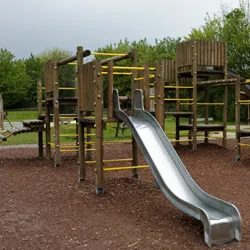
The advice remains the same. Personal trainers and fitness magazines repeat this phrase over and over until it becomes noise. “You don’t need a gym.” You can practice anywhere. Skipping rope in a small hotel room. Run up the stairs to the office. The logic makes sense. Space is limited. Time is running out. But the method is important.
Perhaps an example of this “no equipment” philosophy is “Thug Workout: Street Fitness”. Produced by the hip-hop group Ruff Ryders, this video redefines what a gym is. Treat the urban landscape as a material and not as a background. The playground swing becomes a handle. Racks became pull-up stations. The picnic tables have been converted into benches. The goal is simple. Transform whatever the street offers into resistance training.
Urban weight training using everyday objects
The aesthetics are innovative, but the mechanics are simple. The video doesn’t hide its influences. The soundtrack is hip hop. The commentary is gritty. Some people may not like this atmosphere. But biomechanics work. If you take the style away and look at the movement, you see the functional full-body routine.
Consider your infrastructure. Scaffolding is available with horizontal bars of different heights. These are ideal for pull-ups. Strengthen back width and grip without a cable machine. Playground equipment often includes monkey bars and uneven bars. These challenge stabilization muscles that are ignored by standard machines.
The picnic table is sturdy. flat surface. Effective for the tricep dip. The angle varies depending on where your hand is placed. The higher your position on the table, the more the shoulders are involved. Lower means more triceps. You can control the load by adjusting your leverage. No weights needed.
Then there are the debris. Spare tires are everywhere in the urban environment. Looks like garbage. They act as heavy medicine balls. Holding the tires for overhead shoulder presses can cause instability. You need to core has to fire to keep your weight balanced. Regular dumbbells are stable. This is not the case with tires. That instability is the workout. This allows for greater involvement of the rotator cuff and abdominal stabilizing muscles.
“If you take a cue from the thugs and start looking around, you’ll find that there’s great exercise equipment everywhere.”
Money is not a barrier to entry. This is an observation. Most people see a border when they see chain-link fence. Street fitness enthusiasts see vertical bars as parallel bar dips and ladder hanging knee raises. The shift is perceptual. There is no need to look for equipment anymore. You begin to understand its practicality.
Hula training: Nostalgia as core training
Speaking of unexpected tools, check out the garage. That dusty box in the corner probably contains your childhood toys. It’s not just for fun. This is a tummy toner.
5: Hula Workouts
hula hoop Sounds like a joke. Sounds like a party favor. However, the physics of rotating a weighted circle around your waist requires continuous core engagement. This is not passive. This is a combination of isometric holds and rhythmic movements.
The hoop causes your abs to contract and release in a circular motion, maintaining momentum. If you stop moving, the hoop drops. This is immediate feedback. The device itself will tells you when your form breaks.
This isn’t just for kids.
The Frachea case of 2008 remains a comic book. Ellen DeGeneres hosts a show from a swivel chair, promising abs of steel and a slim waist thanks to passive rotation. A kinesiology professor later told ABC News that standing still and exercising actually burns more calories. This chair is basically a gimmick.
But giving up the props doesn’t mean abandoning the movement.
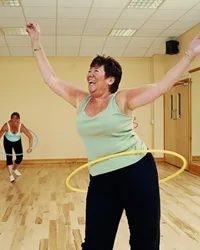
Hula hoops have quietly moved from children’s playgrounds to adult fitness studios. Trainers claim that 30 minutes of hula hooping will give you the same sit-up workout as 500 sit-ups. What’s in it? You have to use the right equipment. Kid-sized basketball hoops are often too light and narrow to maintain speed. Adult-sized weights require skill. Once you master this skill, you can perform a low-intensity aerobic workout that strengthens your core muscles.
4: Pogo and trampoline training
Pop culture has long celebrated jumping. Criss Kross demanded it. The Pointer sisters were waiting for this. When all else failed, Van Halen made this suggestion.
Most people forget about the possibility of vertical movement in their daily life. Running puts strain on the knees. Pogo sticks offer another way. The bouncing mechanism of the pogo stick reduces the impact forces on the joints by about 34%. You can continue vigorous aerobic exercise. The difference is shock absorption.
Take it a step further by bouncing on the mini trampoline. Jumping without intention is good exercise. Intentional recovery is where muscle work reaches its peak. Because of the unstable surface, the muscles in the core of the abdomen must exert constant force to maintain balance. It doesn’t just float in the air. you are very attractive
You can also target your upper body by adding dumbbells or a medicine ball.
The goal is not height. If you want to fly as high as possible, that’s a completely different sport. Recovery means control. It’s about moving with focus. This is meant to force your body to stabilize against gravity in a way that doesn’t require you to stand or run.
3: Punk Rock Practice
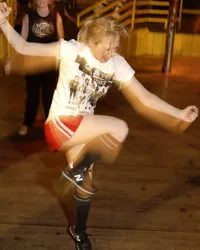
When you enter the gym, the first thing you feel is the atmosphere. It smells like stale sweat and ambition. General pop music is heard from the speakers. It is very safe. This is as expected. It’s very boring.
But what happens when the music matches the intensity of your movements?
Most people think of exercise as a lonely and boring activity. Get on the treadmill. You stare at the wall. You ignore the world. Punk aerobics completely rejects this assumption. It doesn’t just add noise. It adds attitude.
Anti-fascist fitness system
Maura Jasper didn’t start doing punk aerobics to fit into jeans. She started it to break what he calls a “fascist fitness regime.” This is a powerful phrase for the dance floor. But look who showed up. They aren’t there in the latest Lululemon collection. They wore ragged fishing nets and oversized military jackets.
Location is important. These classes are not held in fluorescent, air-conditioned and humming rooms. They happen in clubs. Decades ago, you might have seen the Sex Pistols or the Stooges at these clubs. Now you’re sweating their greatest hits.
This is not just an aesthetic problem. It’s about the environment. The smell of beer hangs in the air. You can smell cigarette smoke. It’s tough. That’s true.
An hour here is not a relaxing time. It is very energetic. It’s noisy. Yes, moshing sessions.
“These punks don’t work out in a fluorescent lit gym, they work out in clubs watching night shows.”
Some classes use spray painted bricks for weight lifting. Yes, it’s a brick. chrome-plated dumbbells. brick. they are rough. It is very heavy. That’s true.
As if the usual punk aerobics wasn’t enough, new branches are emerging in this subgenre. There is something called punk rock yoga. You won’t hear “om” here. “oi!”. And then there’s the punk rope. This is exactly what the name suggests: jump rope, intense and unforgiving.
This challenges the idea that you have to be polished to stay healthy. It doesn’t have to be perfect. You just need to be present. And it’s noisy.
When Yoga Gets Weird
Yoga was originally a spiritual practice. This is to prepare your body for meditation. A few hours. Quiet. still.
Then the gyms got involved. They want toned bellies. They want a toned backside. They want cut shoulders. So they stripped away the spirit and left behind sweat.
Now this is still not enough. The industry needs novelty. It needs fusion.
So we have yoga and pilates. A combination of yoga and boxing. Yoga mixed with spin. Combine yoga and running.
Is yoga/kickboxing the way to Zen? Probably not. But it keeps people coming back. Curiosity is a powerful motivator.
One particular fusion that is gaining attention is anti-gravity yoga. Brought to you by Crunch Fitness. Use a fabric hammock hung from the ceiling.
The premise is simple. You hang. You invert. Stretch.
“being ensconced within a hammock can increase your flexibility and give you a deeper stretch…”
Proponents claim this helps increase flexibility. They say it allows to stretch deeper than normal gravity. It feels like floating. I feel free.
But there’s a problem. sticky, humid catch.
The New York Times reported that one attendee complained of “the smell of yoga.” It is not a pleasant smell. This is sweat that collects in the fabric. That body odor is concentrated in the hammock. This is the reality of an communal exercise, amplified.
Do the benefits outweigh the smell? For some, yes. For others, it’s a dealbreaker.
It’s not just about burning calories. it’s about finding a way to practice
Beyond the Backyard: How to Get Both You and Your Dog Moving
Just take regular walks. Chasing a tennis ball in the garden can also be effective. But if the routine has stalled or your dog needs some serious aerobic exercise, there are options that go way beyond the leash. You may even burn some of your own calories in the process.
High intensity training for real results
If you need your dog to lose weight or increase endurance, you can buy a dog treadmill. Or you can try a bootcamp. At Thank Dog! Bootcamp, the stakes are literal in Los Angeles. If the dog does not follow the commands, the owner must do 10 push-ups. It forces people to focus. It burns legs. Works for both species.
Calm Opposite: Doga
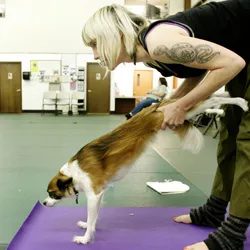
Mellow dogs? Try doga. Yoga for dogs. This approach flips the script. Pets can help you stretch deeper in certain poses. You hold their limbs to support them in others. It is physical support for them. It is physical support for you.
The class often includes a massage. These are designed to improve your dog’s digestion. Humans secrete large amounts of happy hormones. The stress drops. The bond tightens.
A dog’s yoga partner
Haven’t learned Downward Dog yet? Your four-legged friend will help. literally. They are already in the pose. And who better to help than the animal that inspired it?
Cobra. Eagles. Dolphin. Other animals can also provide inspiration for yoga poses. Will they get their own classes? No word yet. Probably not. But the idea is fun.
The strange history of non-traditional fitness
This list does not end with the neat bow. We are left with a collection of quirks that we will do anything to burn calories.
The sources behind these headlines include mainstream news and niche fitness magazines. Newsweek profiled the benefits of aerobics in 2002. The Times reported on heels as sneakers in 2006. That sounds like a recipe for injury unless you consider the situation with the target muscles.
A trampoline park in St. Louis is making headlines for its “high level of fun.” It’s not just a game. It is structured rebounding.
And there are some more obscure references. In 2003, an article in the Sunday Telegraph called it a “weird workouts”. Carey and Fraser may have touched on an early trend in this field in a 1993 article in Health called “Vital Signs.”
Digital era and media visibility
The advent of the Internet has changed the way we find classes.
ABC News published a column on weight loss products in 2009. It included weird workouts as part of a broader category. MSNBC covered the “Hula Chair” in 2008. Do you sit while you move? It sounds like a gimmick. The article questioned whether this was dangerous.
The media has been following these trends for years. The Twin Falls Times-News reported on this provocative dance training in 2009. The Miami Herald noted how yoga is being turned on its head. Yes, this is the ancient practice. But modern adaptations change the focus.
Social media and online archives keep these stories alive. Links from 2009 still lead to the original report.
Niche communities and local trends
Not all exercises make national headlines. Some stay in their local.
A 2007 Richmond Times-Dispatch article referred to a “punk rope”. It’s an acquired taste. Enjoying strength training requires a certain way of thinking.
The Los Angeles Times reported on grip strength in 2009. Sounds easy. It is often overlooked.
In 2009, trampoline fitness was featured in Canadian magazines such as Alive. Kennedy’s article discusses trampoline fitness as a way to rebound toward fitness. It emphasizes the benefits of low impact.
The New York Times has always been a consistent chronicler. In 2002, They covered moshing to oldies. No need for Lycra. Just movement. They also wrote about the circus in 2000. Hendrie calls it “daring to be a daredevil”.
A 2002 New York Times article also featured hip-hop workout videos. Holloway noted the sensibility of this move. It’s not just exercise. This is culture.
Human factors in fitness
Why try these things?
A 1999 Harper’s Bazaar article described the “3-ring workout”. This is dramatic.
In 2006, ABC’s GMA featured karaoke on wheels and stiletto heels. Lallanilla found this novelty. It attracts people who would otherwise ignore the gym.
The New York Times covered trapezes, runways and gyms in 2009. Lee’s article combines performing arts and physical exercise. The lines blur.
The connection to a “downward-facing humans” was a phrase used in 2009. Lyttle’s work focuses on yoga with dogs. It’s about connection.
Accessibility and inclusion
Fitness is not one size fits all.
The Washington Post published “On Your Feet” in 2007. Payne’s article may be about shoes and stance.
Salon published Why I Hate Partner Yoga in 2008. Price’s critique shows that not all variations are for everyone. Intimacy in movement is not for everyone.
In 2002 MTV featured “Ruff Ryders’ Thug Workout”. Reid reports that Taebo took it to the street. It’s rough. Real.
Books such as Mitchel P. Roth’s Prisons and Prison Systems (2006) provide background information. Roth’s research could address physical regimens within confinement. It shows how structure forces movement.
Rowsome’s Maclean’s article “When you really wanna be sedated” (2007) offers a different perspective. It refers to a desire to release. Or maybe it’s just passive.
Final thoughts on a weird workouts
Sources vary. They span decades.
The Los Angeles Times reported on dog yoga in 2003. Stein’s headline was playful. “Turning dogs into cobras.”
The San Jose Mercury News reported on Fido’s health in 2005. Stober’s article shows the influence of the pet industry.
The Tacoma News Tribune reported on the stripper-inspired workout in 2006. Sullivan noted that the class helps women get in touch with their bodies. It has a fun factor. This is not just an about the aesthetic.
“Sing Along Aerobics”, New York Times, 2000. Villarosa’s article brought music to the corner gym. It makes it accessible.
The Daily Mail reported on high heel training in 2005. Wheeler’s article may have dealt with biomechanics.
“The Thug Workout” was featured in The Source magazine in 2009. Woodie’s article describes the effect of Street Style on fitness.
These are not just jokes. They are real classes. real sources. Real people are trying to move. This variety shows that boredom is the enemy of consistency. If you can laugh while you’re sweating, you’ll definitely come back.
The reference still exists. Trends continue to evolve. People are always looking for the next weird way to burn calories.