







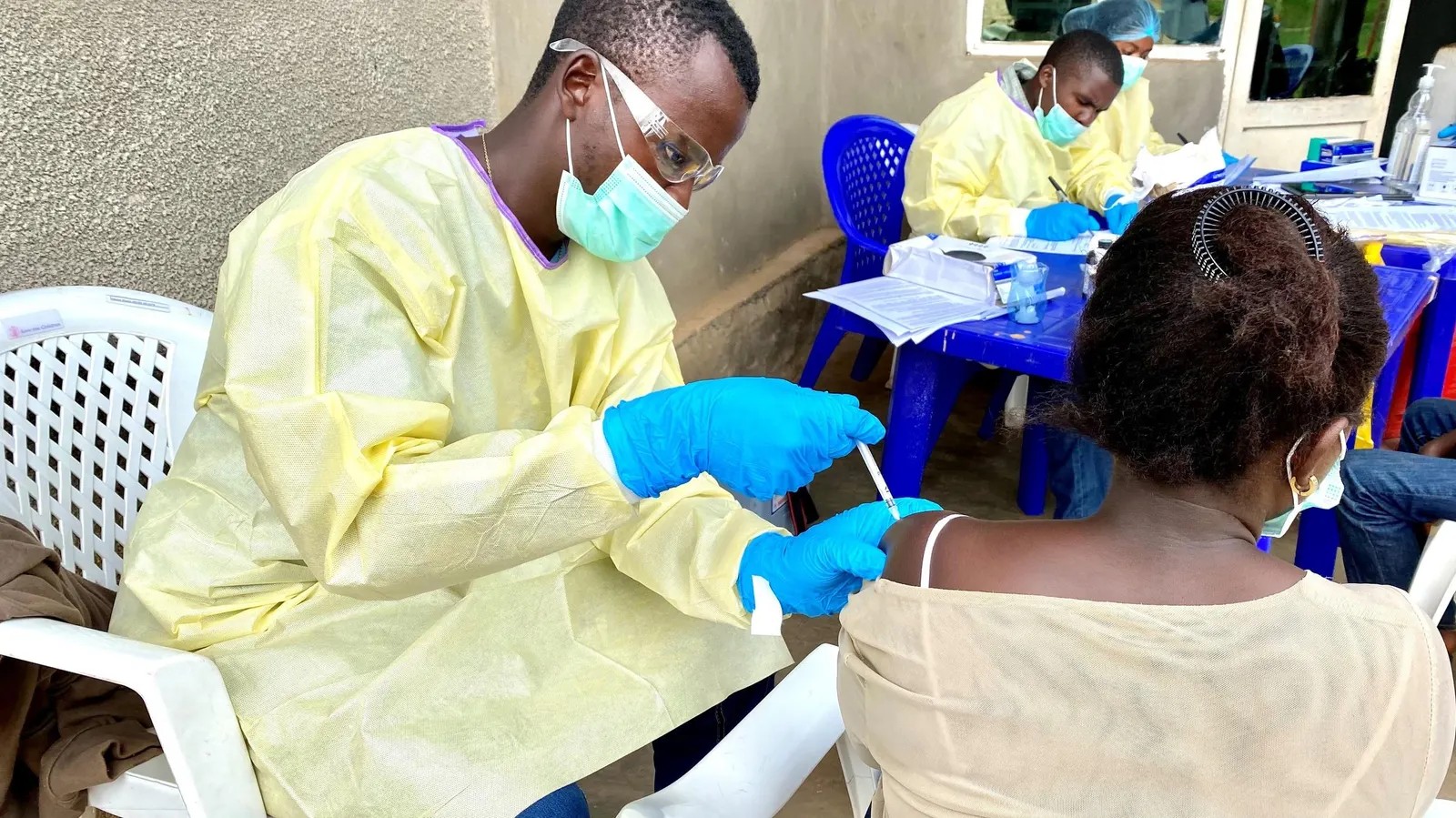
Ituri province in the DRC.
That is where a new Ebola outbreak has hit. Hard. The World Health Organization confirmed it Friday.
Eighty-seven dead.
336 suspected cases already. The number keeps climbing.
Most Americans look at a map, see that big country in central Africa, and think, “Okay. That’s far away.” They close the tab. They keep scrolling.
It shouldn’t be that simple.
This isn’t just a local tragedy. It’s a global threat. Borders are imaginary lines on paper. Viruses don’t read them.
Think about the last few years.
One cough on a plane in one country, and suddenly you have Hantavirus spreading on a cruise ship with passengers from half the continents. Modern aviation shrinks the world down to an eight-hour flight. Ebola moves slower than a coughing virus, sure. You can’t get it from breathing the same air. You have to touch the vomit, the blood, the sweat. Touch the contaminated hospital bed. The clothes.
But it only takes one traveler.
One case in Uganda. Neighboring Congo. One death reported. That’s how it starts. Public health is a single net. If one side tears, the whole thing fails.
The Wrong Virus
There’s another layer to this. It’s not the usual suspect.
Most of us know the Zaire strain. We heard about it during the massive outbreak years ago. We have tools for that one. Treatments. Vaccines.
This?
This is the Bundibugyo strain.
According to the WHO, it’s different. Scarier. In one major way.
There are no approved treatments.
No vaccines either.
When a virus hits hard and you have nothing but supportive care, things get ugly fast. You isolate people. You contain them. You pray they survive on fluids and basic hygiene. But without meds to stop the virus inside the body? The death rate hits 50%. That’s the ceiling, says the DRC health minister. Half.
Contact tracing becomes the only shield. It works, theoretically. In practice, it’s fragile.
A Broken System
You can trace contacts easily in a peaceful city with good phones.
The DRC is not that city.
Political turmoil. Armed conflict. Violence in the streets. Since 1976 this country has seen a dozen outbreaks. They have the experience, but they lack the safety.
How do you trace a contact when roads are dangerous? When fear stops people from getting tested? When communities distrust the government or simply cannot move to get isolated?
People stay home. They sicken quietly. The virus spreads.
Then you look at why the response feels so slow.
The US pulled the plug.
Well, nearly pulled it. Last year the Trump administration announced an 83% cut to USAID activities. We’re talking billions of dollars vanishing from the global health ledger.
That money wasn’t sitting in a bank vault.
It was building surveillance systems. Labs. Vaccination campaigns. It was training nurses and doctors on the front lines in places with zero resources. Places like Congo.
These programs diverted disease for decades.
When you cut them, the infrastructure crumbles. Fewer epidemiologists. Duller surveillance. Slower response times. The virus has room to breathe while the world argues.
Evidence?
Officials think the current Ebola outbreak started in April.
Confirmed last Friday.
Two months.
Two months of a virus with a 50% mortality rate moving through communities while no one officially knew it was there. That lag tells a story. The system is weak. It couldn’t recognize the threat in time.
We think it’s over when it’s overseas. But it’s never over until the net holds. And right now? The net has holes.


