




Think you’ve seen all the injuries? Wait until your ankle bends. A sudden sharp turn is a pain that comes at the worst possible moment. Worst of all, it seems to have a mind of its own and takes on the stubbornness of bad habits. Weak ankles are a disadvantage. A strong person can change everything.
The ankle is often the weak link in our kinetic chain. You will be attacked every time you walk, run or jump. However, they are rarely trained with the same intensity as the quadriceps and glutes. result? Repeated sprains can prevent athletes and leisure walkers from competing.
The solution is not expensive equipment. This is proprioception.
Why strong ankles prevent recurring pain
The ankle joint weighs thousands of times a day. If it is unstable, small negative effects accumulate. These “little blows” can ruin your season or limit your daily activities.
Proprioception is your body’s ability to know where you are in space without looking. This is a built-in GPS. As this sensation increases, your muscles react quickly and correct your balance. You don’t realize you’ve slipped until you stand up. Without it, bumpy pavement or a sudden change of direction could send you to the emergency room.
Exercising your ankles can strengthen this neural pathway. Transforms your foot from a passive shock absorber to an active stabilizer. The benefits are tangible. You will have fewer sprains, a faster recovery time and feel more confident in your sport and everyday life.
3 smart exercises to improve ankle stability
Gym membership is not required. All you need is 30 seconds and a flat surface. These exercises target the small stabilizing muscles that are often overlooked when lifting heavy weights.
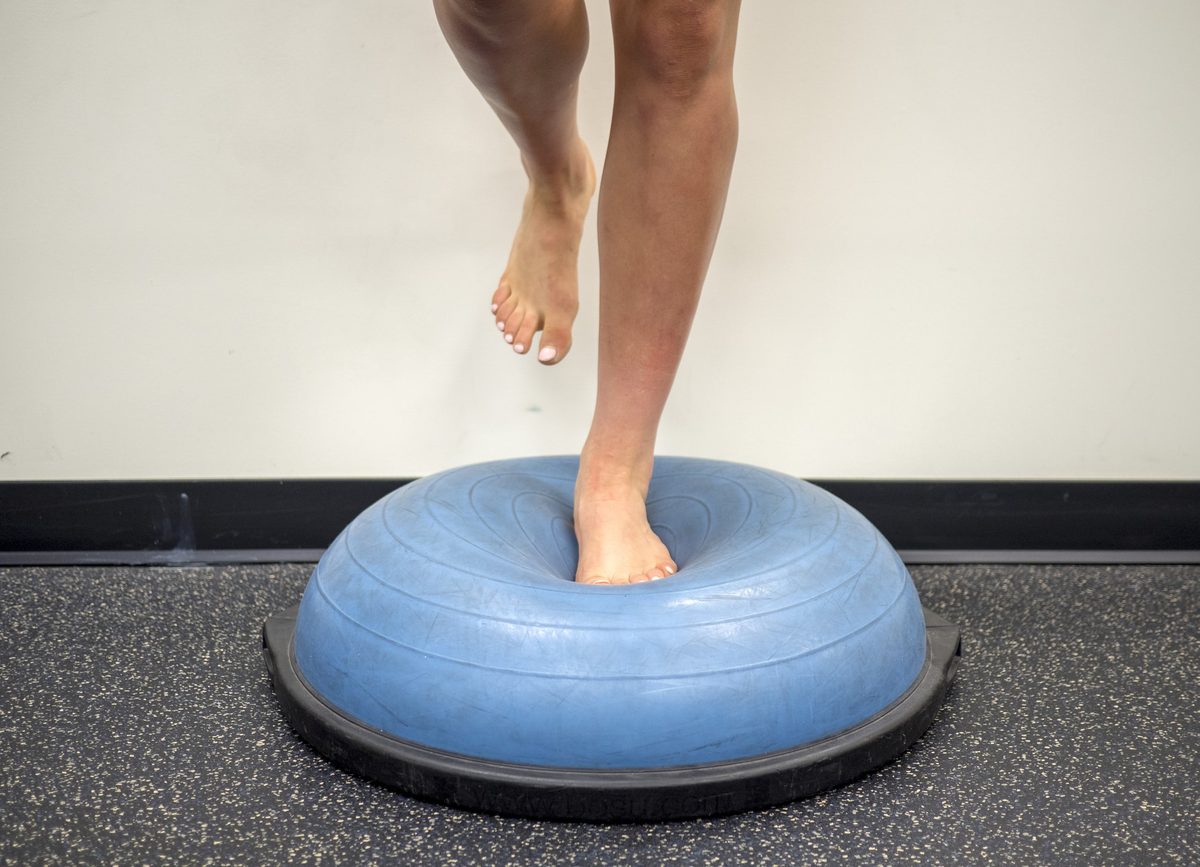
Single-leg balance
This is the basics. Start standing on one leg. Keep one leg slightly bent in front of you for balance, but don’t touch it.
Stay in this position for at least 30 seconds. When you can do this without shaking, close your eyes. When the visual cues are removed, the vestibular and ankle sensors are activated.
- Frequency: 3-4 times a week.
- Progression: Stand on a folded towel or padded yoga mat to add instability.
Rope walking
Find a straight line on the floor. It can be a grout line in the hallway or an imaginary line in the living room.
Walk along this line from heel to toe. Extend your arms to the sides as if you were walking on a cable car. Please move slowly. The goal is control, not speed. If that feels too easy, try walking backwards or adding a small obstacle to cross.
- Location: Anywhere. Corridor, terrace or office corridor.
- Benefits: This builds dynamic proprioception. Teach your ankles to react when you move.
Pogo jump
Simple, but very effective. Jump from one foot to the other. You can move left/right or forward/backward.
Keep your knees flexible. Descend slowly. The goal is to feel that your ankle is absorbing the impact, not your joints. Start with low, small jumps. The height must not be higher than a shoe box.
- Duration: 3 sets of 30 seconds each.
- Progression: Place a light object (such as a rolled towel) on the floor and jump over it.
How to make it stick (and not get damaged)
Consistency beats intensity. Doing these exercises intermittently will do nothing for long-term stability. We must incorporate them into our lives.
Start simple
It’s easy to jump right into the unstable surfaces. No, start with a solid foundation. Control your balance. Next, we introduce the instability factors. If the exercise feels too easy, make it even harder. Stepping on the stairs can cause injury.
Include it in your daily life
Don’t have enough time? Hack your day. Brush your teeth balanced on one leg. Turn your commute into a tightrope walk. The most important thing is regularity. A few minutes a day is much more effective than an hour once a month.
Warm up and listen
Do not start dynamic training with cold ankles. Start by rotating or bending slowly. This increases blood circulation and prepares the tendons.
Adjust for difficulty. Stop if you feel pain. Discomfort is normal. There should be no severe pain.
Conclusion
Just because your ankles are strong doesn’t mean you can lift heavy things. Accuracy is key. It is designed to teach your body self-control before falling.
This doesn’t just apply to runners and basketball players. Anyone who walks, stands or lives can benefit. Investing in ankle stability is an investment in longevity. It keeps you going. It makes you independent.
Get started today. Your future self will be grateful that you took the first step without falling.