







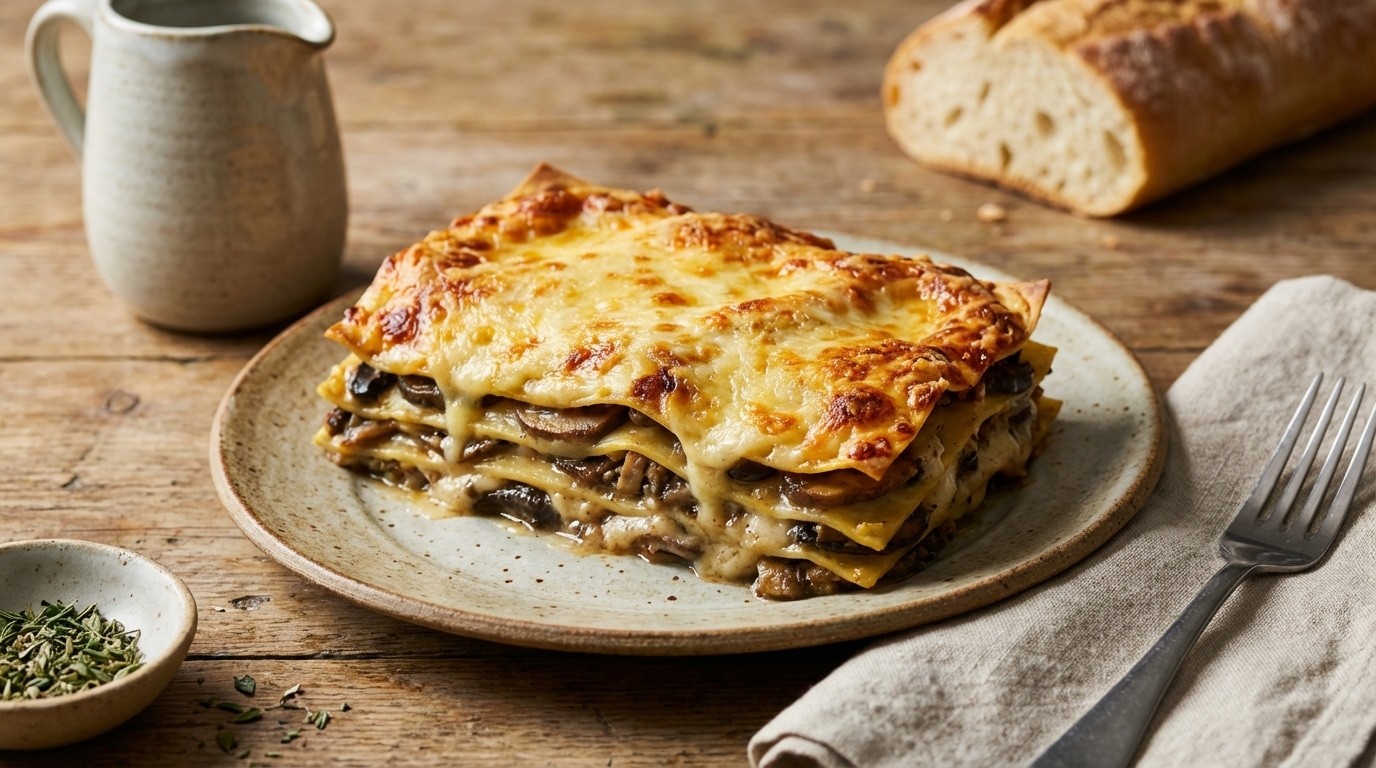
Sunday light hits the table. The oven hums. You need one dish to shut down the debate. No bolognaise. Just layers. A smell of garlic and thymes. A white sauce that clings. And that top layer? It cracks under the spoon.
This is creamy mushroom lasagna. It has character. It has depth. And it leaves the red sauce waiting.
Why mushroom lasagna works when meat doesn’t
It comes down to contrast. The creamy béchamel fights the earthy, toasted notes of browned mushrooms. It feels like family food. Safe. But lighter. The gratin on top seals the deal. Crispy outside. Soft inside.
You get a “meat-like” mouthfeel without the meat. How? Texture. Shiitakes offer a chew. White button mushrooms (champignons de Paris) go soft. Mix them. The filling gets interesting. Each layer tells a story.
The trick? Sear them hard. Wet mushrooms make soggy pasta. Dry, browned ones make flavor.
The aroma profile is simple but loud. Garlic and thyme in the pan. Nutmeg in the sauce. Gold on top. It’s warm. It’s addictive. You take one bite. The rest follows.
The ingredients list
Keep it simple. Quality matters more than quantity.
For the mushroom mix
– 300g white button mushrooms
– 200g shiitake mushrooms
– 2 cloves garlic
– 2 sprigs thyme
– 20g butter
– 1 tbsp olive oil
– 1 tsp fine salt
– Black pepper
For the classic béchamel
– 50g butter
– 50g flour
– 500ml milk
– 1 pinch nutmeg
– 1/2 tsp fine salt
– Black pepper
For assembly
– 12 dried lasagne sheets (about 250g)
– 120g grated Gruyère
– 30g grated Parmesan (optional)
Step 1: Sear the mushrooms until dry
Brush the mushrooms. Slice them. Do not wash them in water. They will absorb it.
Heat the pan hard. Add butter and olive oil. Add mushrooms. Do not crowd the pan. If they steam, you lose the flavor. You want browning. Color equals taste.
Once they are browned, add chopped garlic and thyme. Season with salt and pepper at the very end. Wait until the water evaporates. You should hear sizzling, not bubbling.
Step 2: A béchamel that holds its shape
Melt the butter. Add the flour. Cook for one minute. This is the roux. It should foam. Do not let it turn brown. You want a white sauce.
Add warm milk. Slowly. Whisk constantly. If you dump it in, you get lumps. Whisk until smooth. The sauce should coat the back of a spoon.
Simmer for 3 to 5 minutes on low heat. This cooks out the raw flour taste. Add nutmeg, salt, and pepper. The nutmeg is key. It adds that “old school” comfort note.
Step 3: Build the layers
Preheat oven to 180°C (350°F).
Spread a thin layer of béchamel in the bottom of the dish. This stops the pasta from sticking.
Add lasagne sheets. Add mushroom mix. Add béchamel.
Repeat. You want 4 layers. Keep them even. Finish with béchamel. Sprinkle Gruyère on top. Add Parmesan if you like it salty.
Step 4: Bake and wait
Bake for 35 minutes. Look for a golden crust. The edges should bubble.
Take it out. Wait. This is the hard part. Rest for 10 minutes.
If you cut it now, it slides. It falls apart. Resting lets the sauce set. The layers firm up. You get clean slices. The cheese hardens slightly. The flavors merge.
Details that save the dish
Dry is better than wet. The umami comes from the toasting. A hot pan makes the difference. Cook in batches if needed.
The béchamel must be thick. If it’s soup, the pasta turns to mush. Cook it long enough to lose the flour taste. It should be velvety, not watery.
Resting isn’t just advice. It’s physics. The heat distributes. The structure stabilizes. The garlic, thyme, and nutmeg agree with each other.
Want to change it up? Add cream to the béchamel for extra silk. Add wilted spinach for color. Swap Gruyère for Comté. Add a little blue cheese for a sharp twist.
Serving the ritual
Serve with a crisp salad. Sharp vinaigrette. Mustard helps cut the richness. Or roasted veggies. Keep the theme warm.
Drink a white wine with body. Or a light red. The mushrooms hold up to both.
Make the sauce and mushrooms ahead. Assemble the night before. Keep it in the fridge. Bake it later. The flavor gets deeper. The stress gets lower.
The kitchen smells like gratin. The table is set. You don’t need meat to feel full. You just need patience. And butter.
How to store and reheat lasagna for best results
Leftovers actually improve overnight. That’s not just a nice thought. It’s structural. The flavors settle. The texture firms up. Slicing becomes clean. No messy slides. Just perfect, distinct layers that hold their shape when you lift the slice out of the dish.
Storage is straightforward. Keep it covered. Let it cool completely before putting the lid on. Condensation makes pasta soggy. You don’t want that.
Reheating requires strategy. The microwave is fast. It’s also the enemy of a crisp top. If you care about texture, skip it. Use the oven instead.
Preheat to a moderate temperature. 350°F works. Place the lasagna in an oven-safe dish. Cover with foil for the first ten minutes. This warms the center without drying out the edges. Then remove the foil. Let the top bake for another five to ten minutes. The cheese browns. The béchamel bubbles. The crust returns.
Why vegetarian lasagna tastes better the next day
The magic lies in the ingredients. Mushrooms need time to release their moisture and deepen their umami. A well-browned mushroom layer tastes richer after resting. The nutmeg in the béchamel mellows out. It stops tasting like spice and starts tasting like comfort.
Vegetarian lasagna often gets a bad rap for being bland. This version isn’t. It has body. It has flavor. It delivers the same satisfaction as a meat-heavy Sunday roast. Just without the heaviness.
The contrast matters. Soft pasta. Creamy sauce. Crisp topping. That interplay is what makes the dish work. It feels indulgent. It feels earned.
Choosing your next vegetarian lasagna variation
One version done. Many left to try. The base recipe is solid. Now comes the fun part. Tweaking.
Spinach adds color and iron. It wilts down nicely between layers. Comte cheese brings a sharp, nutty edge that cuts through the richness. A splash of heavy cream in the béchamel makes it lusher. More luxurious.
Which direction do you take? It depends on your mood. Do you want earthy? Go mushrooms. Do you want sharp? Go Comte. Do you want pure comfort? Add the cream.
The oven is ready. The pasta is waiting. What’s on the menu tomorrow?


