







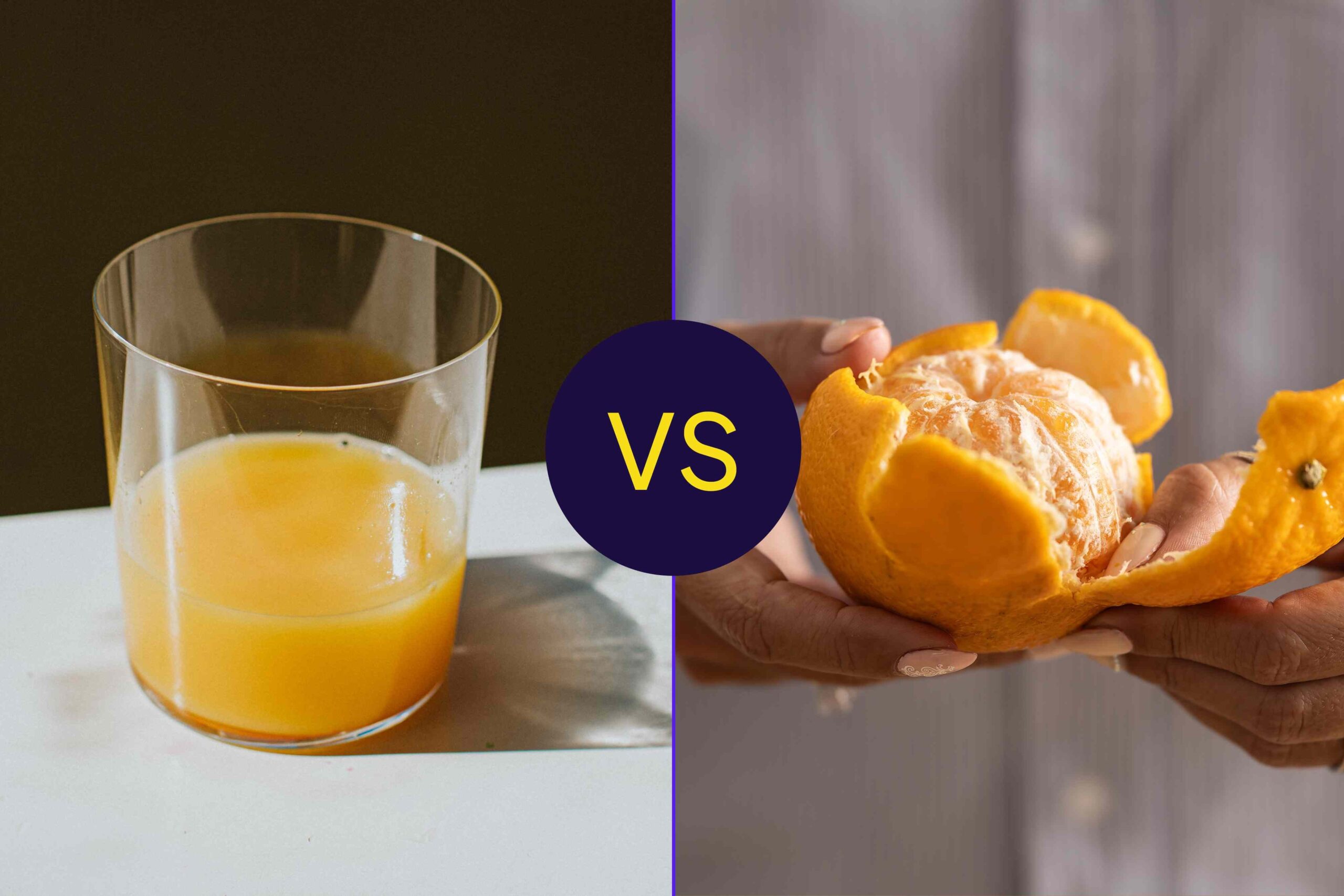
Both oranges and orange juice are healthy ways to get essential nutrients, but whole oranges generally provide a greater benefit for immune function and weight management. The key difference lies in fiber content, vitamin stability, and calorie density.
Vitamin C: Whole Fruit Wins
Oranges and orange juice are excellent sources of vitamin C, a vital antioxidant for immune health. However, whole oranges contain more vitamin C by weight than juice. A single navel orange provides roughly 82.7 milligrams, while an 8-ounce glass of fortified orange juice delivers around 71.2 milligrams.
This difference arises from processing. Pasteurization and storage degrade vitamin C in juice, reducing its potency by as much as 15% compared to fresh-squeezed varieties. Vitamin C is sensitive to heat, oxygen, and light, meaning juice loses some of its original benefits over time.
Weight Management: Fiber Makes the Difference
For those prioritizing weight loss, whole oranges are superior to juice. The primary reason: fiber. Oranges offer 7-13% of your daily fiber intake, a nutrient removed during juicing. Fiber promotes fullness, helping to prevent overeating and support healthy weight control.
Beyond fiber, whole oranges are lower in calories, sugar, and carbohydrates than juice. An 8-ounce glass of orange juice has about 44 more calories and 8 grams more sugar than a typical orange. Some juice brands even add extra sugar, further increasing these numbers.
Diets rich in fiber and low in added sugar aren’t just good for weight; they’re linked to better gut health, heart function, and more stable blood sugar levels.
Nutritional Comparison
Here’s a quick breakdown comparing an 8-ounce serving of fortified orange juice with one navel orange:
| Nutrient | Orange Juice (8oz) | Navel Orange (1) |
|---|---|---|
| Calories | ~117 | ~62 |
| Vitamin C | ~71.2 mg | ~82.7 mg |
| Fiber | ~0.5g | ~3g |
| Sugar | ~22g | ~14g |
| Carbohydrates | ~26g | ~15g |
In conclusion : while both forms provide health benefits, choosing whole oranges over juice maximizes vitamin C intake, supports better weight management through higher fiber content, and minimizes added sugar consumption.


