



The Christmas log (bûche de Noël ) is the holiday’s most polarizing dessert. It commands the table in December. Everyone expects it. It also gets judged for it.
You want the purest chocolate flavor. Or maybe you prefer the nutty richness of praline. Or the bright tang of fruit. Getting everyone to agree is nearly impossible. Worse, the dessert often fails. The sponge cakes dry out. The mousse collapses. Guests politely say, “It’s good… but a bit dense.”
There is a fix. A simple one. It changes everything.
It involves adding a thin layer of crispy praline (praliné feuilleté ) between the sponge and the mousse. This isn’t just a garnish. It is a structural and textural revolution. It provides the crunch that defines professional patisserie. It turns a heavy cake into a complex experience.
The texture problem with traditional logs
Why is texture so critical here?
A bûche is not just a rolled cake. It is a study in contrasts. You need soft sponge. You need airy mousse. You need something that crackles. Without that crunch, the dessert is monotonous. It feels heavy. It feels like a chore to eat.
Many home bakers hit the same snags. The sponge becomes too dry. It turns into a sponge-cake throat-clogger. The mousse is too floury or butter-heavy. It overwhelms the delicate flavors. The result is anxiety for the host. Will it hold together? Will it taste like cardboard?
The fear of a “compact” texture is real. It stems from a lack of structural variation.
Why crispy praline works so well
The crispy praline layer bridges the gap between tradition and modern technique. It originates from the meeting of two French staples: hazelnut praline paste and thin waffle crisps (like Gavottes).
This combination creates a textural paradox. It is both creamy and shattering. It has been a secret weapon in high-end desserts for decades.
When placed correctly, it wakes up the palate.
The sponge remains tender. The praline adds snap. The mousse melts over it all. It is a firework of sensations. It mimics the professional standards seen in Parisian bakery windows. But you can do this at home.
Where to place the crunchy layer
Positioning is everything.
Do not spread the praline on top. Do not mix it into the mousse. You must sandwich it.
Place the crispy praline layer directly between the cooled sponge cake and the mousse. This is the strategic sweet spot.
The layer needs to be thin. Think paper-thin. Just enough to support the mousse above without making the slice impossible to cut. It keeps the sponge fresh by acting as a slight moisture barrier. It prevents the mousse from making the cake soggy too quickly, while still allowing flavors to meld.
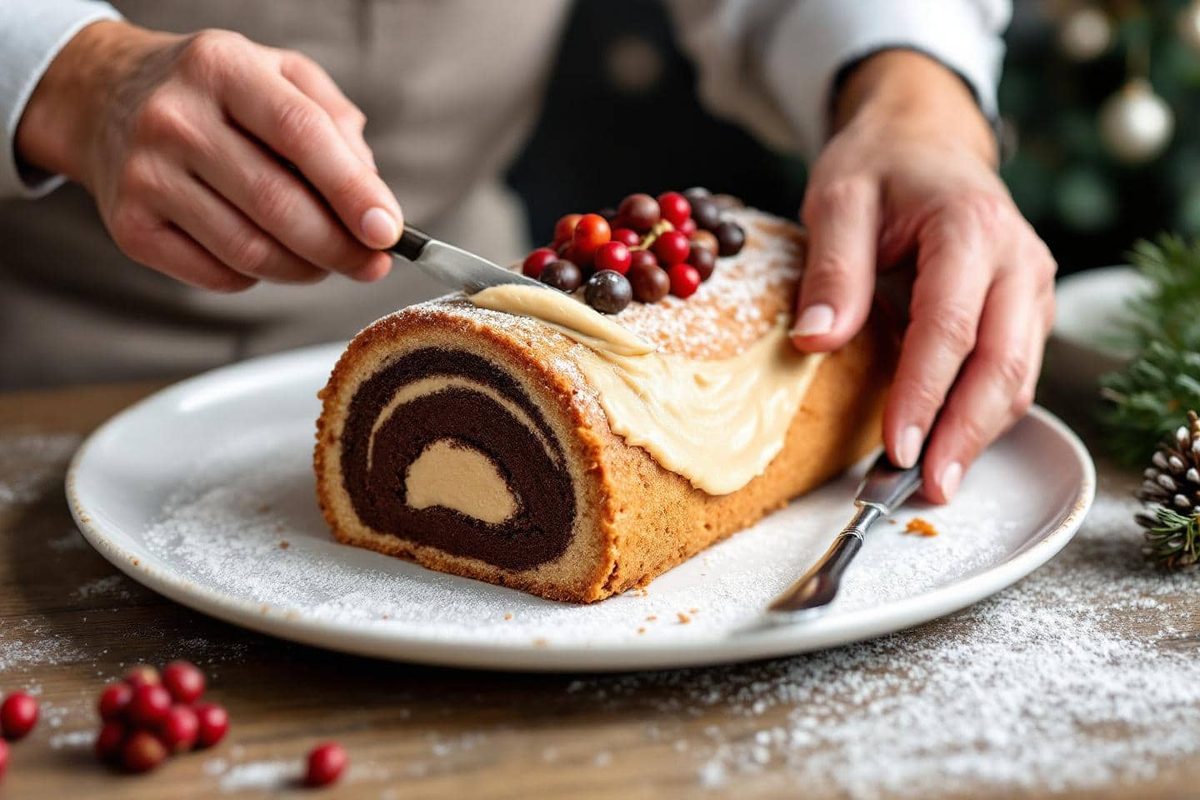
This creates a mille-feuille effect in a single bite. Each slice becomes a landscape of textures.
How to make the layer at home (Zero Waste)
You do not need a pastry degree. You can make this quickly. In fact, it is a great way to use up leftover sponge scraps or broken waffle crisps.
Here is the simple recipe for a log cut into 8 slices.
Ingredients
- 100g milk chocolate (or dark, depending on preference)
- 80g hazelnut praline paste (buy it at the baking aisle, or make your own)
- 60g dentelle waffle crisps (Gavottes brand works best)
Quick tip: If you are short on time, swap the praline paste for a high-quality hazelnut spread. It works surprisingly well.
The Method
- Melt the chocolate gently. Use a double boiler or short bursts in the microwave. Do not burn it.
- Stir in the praline paste until smooth.
- Crumble the waffle crisps with your fingers. Do not pulverize them. You want distinct pieces.
- Fold the crisps into the chocolate-praline mix.
- Spread this mixture onto your cooled sponge. Keep it even.
- Refrigerate for 15 to 30 minutes. Let it set firm.
- Add your mousse on top.
The Golden Rules
Thickness matters. Aim for 4 to 6 millimeters.
If it is too thick, your knife will struggle. You will end up with a messy slice. If it is too thin, you lose the crunch entirely.
Do not overdo the praline. A layer too thick will crush the textural game. A layer too liquid will soak into the sponge. You want a barrier, not a soak.
Use a warm knife for cutting later. It gives you clean slices. It reveals the layers. It makes the effort worth it.
The result is a dessert that doesn’t just sit on the table. It performs.
Will your guests notice the difference? They will feel it. The crunch is unmistakable. The rest is just nostalgia.
The real advantage of baking at home is total control over flavor. You aren’t stuck with the same old chocolate ganache every December. Adding a praline feuilleté (crispy praline paste) layer changes everything. It acts as a flavor bridge.
Think of it as a canvas. The nutty, caramelized sweetness of praline pairs with almost anything you throw at it.
Flavor Combinations That Work
You can tweak the profile based on what your guests actually like. Here are three distinct directions you can take.
Dark Chocolate Purist
If your crowd loves tradition, stick to the classics but upgrade the texture. Use a dense dark or milk chocolate mousse. The contrast between the airy mousse and the sharp, crunchy praline layer mimics the experience of eating a high-end truffle. It feels richer. It tastes more complex.
Fruit Forward
Acidity cuts through fat. That’s basic chemistry. Pair the praline with a mousse made from blackcurrant, raspberry, or lemon. The tartness wakes up the palate. The praline grounds it with sweetness. You get a lighter dessert that still satisfies a sweet tooth without feeling heavy after a big meal.
Warm Spices
Coffee and spéculoos (spiced cookie) flavors work beautifully here. The warm, envelopping aromas of the praline enhance notes of cinnamon or cardamome. It’s not just a dessert; it’s a journey. It moves beyond the standard chocolate forest cake into something more exotic.
The Technique Matters
You can roll it the traditional way. Spread a thin layer of sponge cake. Add the filling. Roll it up over the crispy layer.
Or go modern. Use a gutter mold. Layer the components precisely. Stack them neatly. The praline paste is chameleon-like. It adapts to either method.
“The praline feuilleté is the chameleon of the holidays: it accommodates all kinds of boldness.”
The First Cut
This is the moment of truth. The first spoon breaks the surface.
Suddenly, the texture shifts. The mousse becomes soft. The crunch layer explodes. The sponge cake melts away. People stop talking. They just chew.
This contrast in textures is what professional pastry chefs chase. It gives the dessert an soul that plain cake doesn’t have.
Presentation Details That Matter
How you serve it defines the experience.
- Clean Slices: Dip your knife in hot water before every cut. Wipe it dry. Repeat. This prevents tearing. You get a clean, professional edge.
- Minimalist Garnish: Don’t over-decorate. Toasted hazelnuts look elegant. Fresh red berries add color. Citrus zest provides a fresh note. Less is often more.
- The Salt Finish: A tiny pinch of fleur de salt on top dresses the taste buds. It heightens the sweetness. It adds complexity.
Zero Waste Strategy
Don’t throw away the scraps.
Use leftover crumbly biscuit pieces to reinforce the crunchy layer. Or make mini individual logs. They are easier to transport. Guests can take one home. The magic remains intact the next day. No waste. No mess.
Why This Method Sticks
Try this praline crunch layer once. You’ll notice the difference immediately.
The dessert gains depth. It gains audacity. It triggers memories. Conversations start at the table. Everyone has a favorite bite or the piece with the most filling.
The secret to success isn’t just the recipe. It’s repetition. Try new combinations. Invent your own tradition. Redefine what holiday dessert means for your family.
This technique makes Christmas eco-friendly. It’s generous. It’s festive. By sliding that thin layer of crunch between the cake and the cream, you’re starting a small revolution. You keep the tradition alive while making it your own.
The balance between innovation and classic respect is what makes this method essential for year-end celebrations.