




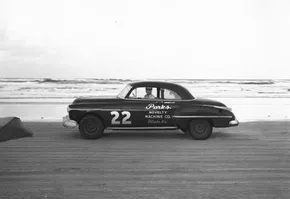
Picture a family sedan tearing up a local dirt oval. There are no strict rules. No safety gear. Just neighbors trying to beat each other to the finish line. It is chaotic. It is wild. It is barely a sport at all.
That was stock-car racing in 1949.
The first Strictly Stock race happened in Charlotte, North Carolina. The cars looked like the ones you drove to work. The drivers were just guys from the neighborhood. Safety was an afterthought. Skill levels varied wildly. It was a dash.
NASCAR has changed since then. The organization is now highly regulated. The cars bear little resemblance to highway vehicles. The drivers are professionals. The appeal has exploded. NASCAR is now the most popular spectator sport in the United States.
This sounds like a bold claim. Consider the numbers.
NASCAR broadcasts air in more than 150 countries. It is the second-highest-rated regular-season sport on television. In 2006, a record 12.5 million households watched the Daytona 500. The sport has an estimated 75 million fans. They spend more than $2 billion annually on licensed products. Corporate spending tells the same story. More Fortune 500 companies sponsor NASCAR than any other sport. U.S. corporate spending on auto-racing sponsorships hit $2.9 billion in 2006 alone.
Why does this matter? Why is NASCAR so popular with Americans?
It is not just one thing. It is a combination. Fast cars. Thrills. Danger. Personable drivers. Tracks that are easy to reach.
This article breaks down how NASCAR works. It looks at the organizational side. It covers the procedures. Understanding the structure helps you appreciate the spectacle. If you want specific driver stats or track details, check out the NASCAR entertainment guide. You should also read How NASCAR Race Cars Work. And How NASCAR Safety Works. Those pieces cover the machines and the protection.
The sport is bigger now. It is more organized. But the core appeal remains the same. Speed. Risk. Community. The rest is just details.