




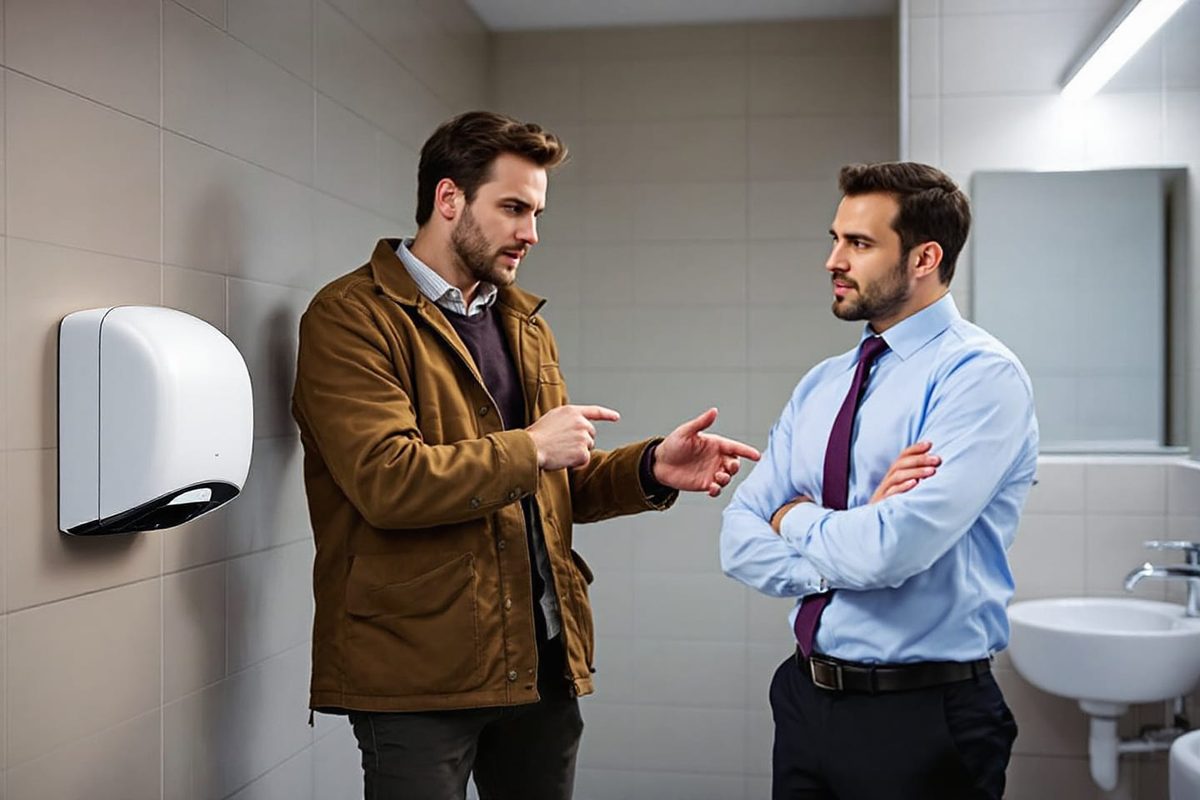
We installed them everywhere. Airports. Train stations. Office buildings. Schools. The electric hand dryer became a fixture of modern hygiene, promising a clean, eco-friendly way to dry hands after washing. It felt like progress. It felt safe.
But is it?
Behind the hum of these machines lies a question that persists: Are these devices actually keeping us safe, or are they quietly circulating bacteria and viruses in ways we haven’t fully considered? The answer isn’t just about convenience. It’s about what happens to the air we breathe in shared spaces.
From cloth towels to high-velocity jets
Not long ago, public restrooms relied on cloth towels or paper towels. They were messy. They required maintenance. They generated waste.
Then came the high-speed air dryer.
These devices promised efficiency. They eliminated the need for paper refills. They reduced trash bins overflowing with used towels. For facility managers, they were a godsend. For users, they were a quick, automatic ritual. You wash. You stand. You wait for the roar. You leave.
The technology shifted our habits. But it also shifted the mechanics of hygiene. Instead of physically removing moisture and contaminants with a towel, we were blowing air across wet skin.
The hidden cost of “eco-friendly” drying
Promoters of electric hand dryers argue that paper towels are wasteful. And they are right. Paper production consumes resources. Transporting them adds to carbon footprints. The electric dryer, by contrast, uses electricity and air.
It seems like a win-win.
But there is a downside. A hidden one.
The air inside these machines is not always filtered to hospital-grade standards. More importantly, the force of the air itself becomes a delivery system. When you wet your hands, you are not just covered in soap and water. You are covered in environmental particles. You have touched door handles. You have shaken hands. You have sat on public benches.
When the high-velocity jet hits your hands, it doesn’t just evaporate water. It aerosolizes particles.
How hand dryers can spread bacteria
Recent studies have highlighted a troubling phenomenon: the aerosol effect.
When a hand dryer operates, it can project hundreds of microbial particles per cubic meter of air. These particles come from two sources. First, the ambient air in the restroom. Second, the surface of your own skin and the sink area.
The dryer acts like a fan. It takes these particles and sprays them outward.
This isn’t just theory. It’s fluid dynamics. The high-speed air creates turbulence. It lifts contaminants from the hands and the surrounding environment. It then deposits them back onto your freshly washed hands, your clothes, or the surfaces of others nearby.
“Far from protecting users, hand dryers risk increasing the dispersion of bacteria in the immediate environment.”
This is the paradox. We use these devices to clean up after ourselves. But in doing so, we may be contaminating the air around us.
Why back-to-school season increases the risk
September changes everything.
Schools reopen. Offices fill up. Restaurants hit capacity. The density of people in public restrooms spikes.
For children, who are still learning thorough handwashing habits, the risk is higher. For the elderly, whose immune systems are weaker, the stakes are higher. For anyone in a “high-risk” community, the environment of a shared restroom becomes a potential vector for transmission.
When hundreds of people cycle through the same air every hour, the concentration of airborne microbes increases. If the drying method amplifies that concentration, you have a recipe for outbreaks.
Gastrointestinal infections. Respiratory viruses. Skin conditions. These are not abstract fears. They are real consequences of shared air quality and hygiene practices.
Paper towels vs. electric dryers: which is safer?
It is not a complex debate. Physics gives us the answer.
Paper towels work through absorption and friction. When you dry your hands with paper, you physically wipe away moisture. You also capture many of the bacteria and viruses that were loosened by soap and water. They stay on the paper. They go into the trash.
Electric dryers, especially high-speed models, do not remove particles. They displace them.
Research in real-world settings confirms this. In high-traffic restrooms, the use of paper towels significantly reduces the spread of microorganisms on surfaces and in the air. Electric dryers, by contrast, can increase the bacterial count on nearby surfaces and in the immediate vicinity of the device.
Some hospitals and schools have already moved back to paper towels. They recognize that in periods of high viral circulation, prevention matters more than convenience.
The bottom line
We love efficiency. We love the idea of a zero-waste bathroom. But hygiene isn’t just about removing dirt from your hands. It’s about what happens to the air in the room.
If you are concerned about exposure to airborne pathogens, especially in crowded public spaces, paper towels remain the more scientifically sound choice. They trap contaminants. They don’t spray them back into your lungs.
The electric dryer is not evil. It is efficient. But it is not sterile. And in a world where we share air, that distinction matters.
Next time you are in a public restroom, pause for a second. Look at the dryer. Consider the air. Then make a choice that prioritizes your health over the facility’s maintenance budget.
It’s a small act. But in the war against invisible microbes, small acts add up.
Paper Towels vs. Jet Air Dryers: The Hygiene Trade-Off
The debate over public restroom hygiene isn’t new, but the science keeps shifting. For years, high-velocity jet dryers have promised speed and efficiency. Now, new models tout HEPA filters and ionization tech to trap particles. The reality? It’s messy. Effectiveness hinges entirely on maintenance. In a busy public facility, keeping those filters pristine is nearly impossible. Users rush. They skip steps. The result? A high-tech device that may actually spread more bacteria than the simple paper towel.
Why Maintenance Matters More Than Marketing
A neglected air dryer becomes a bacterial incubator. Without strict cleaning protocols, filters clog. They turn into breeding grounds. Then there’s human behavior. People don’t wash long enough. They don’t dry thoroughly. Even with advanced filtration, poor usage undermines the technology. Commercial promises often ignore these variables. The gap between marketing hype and public health reality is wide.
How to Protect Yourself in Public Restrooms
You have control over your immediate hygiene, even if you can’t control the facility’s maintenance schedule. First, wash thoroughly. Scrub between fingers and under nails. Water alone isn’t enough. Soap breaks down oils where germs hide. Once done, choose your drying method wisely. If paper towels are available, use them. They physically remove moisture and bacteria. Jet dryers can aerosolize pathogens, spreading them further.
“If paper towels are available, prioritize them for drying hands.”
After drying, avoid touching door handles directly. Use a disposable tissue to turn the knob. This simple step creates a barrier. Carrying hand sanitizer is another smart move. It’s not a replacement for washing, but it’s a useful backup when water or soap isn’t immediately accessible.
The Role of Facility Managers
Public spaces have a duty of care. Managers can reduce risk through education and equipment diversity. Post clear signage about proper handwashing techniques. Train staff to clean dryers regularly. Offer multiple drying options. Paper towels should be available alongside electric units. Prevention beats correction. Proactive measures protect everyone, not just the most vigilant users.
The Bottom Line on Hand Drying
The convenience of jet dryers shouldn’t blind you to potential risks. Studies suggest they may disperse more bacteria into the air than paper towels. With increased foot traffic, these risks compound. Hand drying is essential. The method matters just as much as the act itself. Be critical of the tools around you. Hygiene isn’t just about washing. It’s about how you finish the job. Modernity shouldn’t silently increase exposure. Stay aware. Stay clean.