




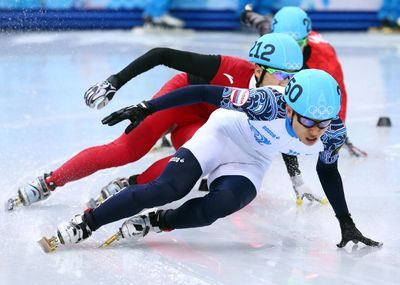
Short-track speed skating is an absolute test of nerve. It demands raw speed, technical precision, and a willingness to be aggressive. Forget the solitary battle against the clock found in long-track events. Here, skaters race directly against each other in a tight pack.
The roots of this sport lie in the rough-and-tumble pack racing popular in North America during the early 1900s. It was so contentious that it appeared at the 1932 Winter Olympics in Lake Placid, New York, though the format was widely debated. The sport didn’t really gain traction until the 1960s and ’70s. The International Skating Union (ISU) began holding annual championships from 1978 to 1980. The first official world championship followed in 1981.
Short-track speed skating arrived at the Winter Games in 1992 in Albertville, France. The program grew quickly. By the 1994 Lillehammer Games, events like the men’s 500 meters and women’s 1000 meters were added. The ISU also set a minimum age limit of 15 for competitors. Recently, that bar has been raised. In 2023, the ISU set the threshold at 17 for the Milano Cortina 2026 Winter Games.
The aggressive nature of the sport often led to messy refereeing calls. Collisions were common. Contact was constant. To fix this, the ISU allowed limited video replays in 2002. By 2012, assistant video referees were part of the official crew. Instant video replays became the standard by 2018. They now decide the outcome of many races.
Racing rinks, rules and events
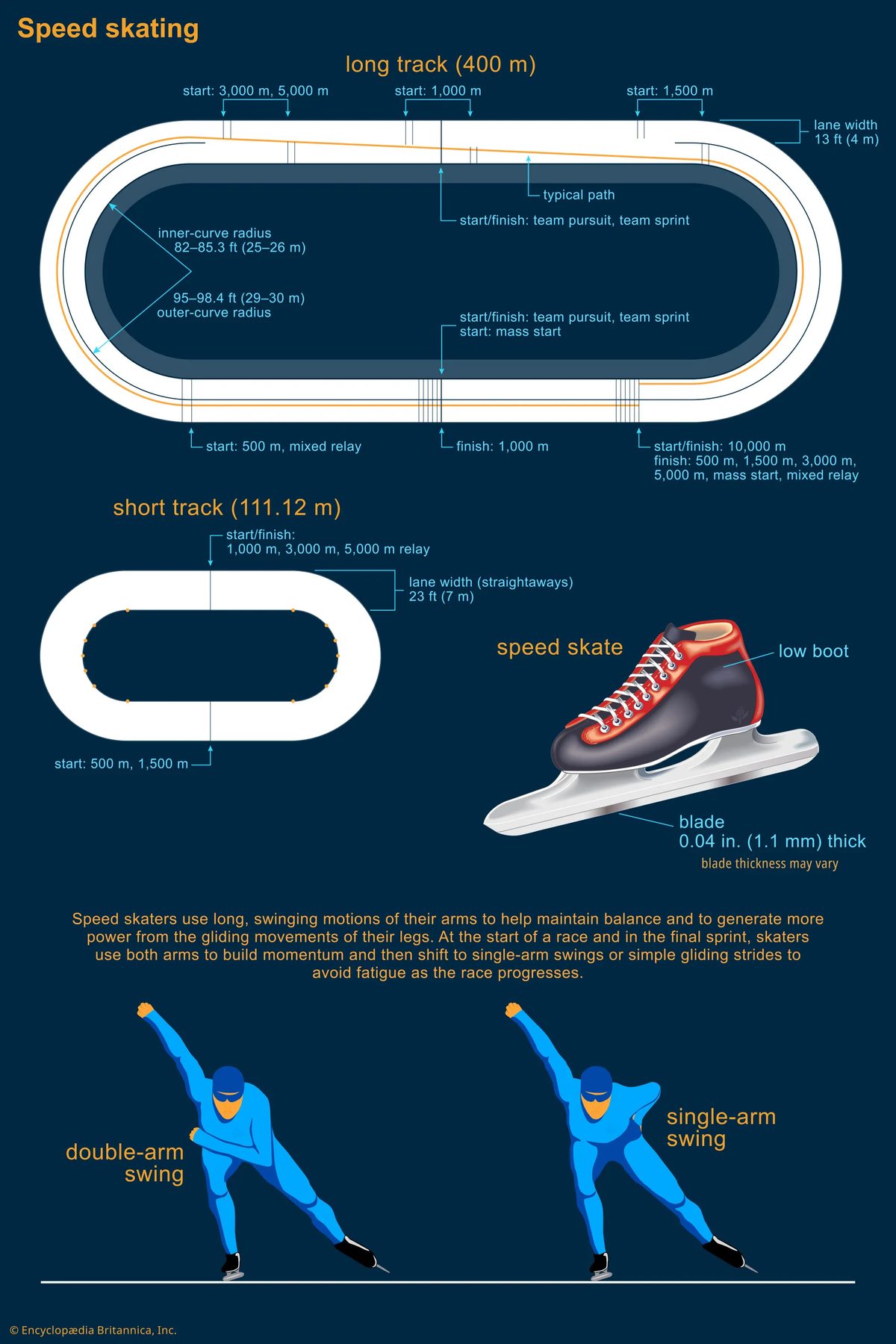
The track itself is a quarter-mile oval, much shorter than the 400-meter long-track surface. This small radius forces skaters into tight corners at high speeds. The pack format means position is everything. You are not just racing the time; you are racing the person next to you.
Events vary by distance. The 500 meters is a sprint. It can be over in 40 seconds. The 1000 meters requires more pacing. The 1500 meters is a battle of endurance. Relays add another layer of strategy. Teams of four switch off, passing the baton or simply taking turns on the front of the pack.
Rules are strict about cutting off opponents. Skaters must stay in their lanes until a designated passing zone. Breaking this rule results in disqualification. The goal is to cross the finish line first. But in short-track, finishing first doesn’t always mean winning. Referees can disqualify skaters for unsafe passing or interference.
Video review is a huge part of the modern game. Judges watch replays to see if a skater clipped an opponent. Or if someone went off-course. The margin for error is tiny. A slight touch can change the result.
The sport is fast. It is physical. It is unpredictable. Fans love the drama. The skaters thrive on the adrenaline. It is a unique blend of athleticism and combat.
Where do skaters train for these intense conditions?

The Geometry of Chaos
The track is tight. Roughly 111 meters for a single lap. That is barely longer than a hockey rink.
Racers do not start from a line. They jam into groups of four, maybe eight. The space is claustrophobic. Speed is deceptive until you are leaning into a 90-degree turn at full velocity. Then the physics take over.
Why Equipment Matters in Short Track
This is short track speed skating, and the gear is non-negotiable. Standard long-track skates have long blades. These skaters need height, not length. The boots are stiffer. The blades are taller to provide lateral support. Without that structure, the centrifugal force would rip you off the ice.
Protective gear is standard. Helmets. Gloves. Knee and elbow pads. The walls are padded for a reason.
Falls are not accidents. They are part of the sport. Skaters jockey for position constantly. Contact happens. It is a brawl at 30 miles per hour.
The Distance Breakdown
Races are short and brutal. There is no endurance pacing here. It is pure anaerobic explosion.
For both men and women, the individual events are:
– 500 meters
– 1,000 meters
– 1,500 meters
The top two finishers in each heat move on. The rest go home.
Relays add another layer of complexity. Women race 3,000 meters in four-person teams. Men go 5,000 meters. It is about strategy. Who takes the lead? Who conserves energy for the final lap? Passing is dangerous. One wrong move and the whole team crashes.
The New Mixed Relay
The 2022 Beijing Winter Games changed the landscape. They introduced the 2,000-meter mixed relay. Two men. Two women.
It is fast. It is chaotic. And it is staying.
The 2026 Winter Games list it in the official program. The format forces teams to adapt. You cannot just have the fastest skater go first. You need cohesion. You need trust.
The sport is evolving. The track stays the same. The danger does not.